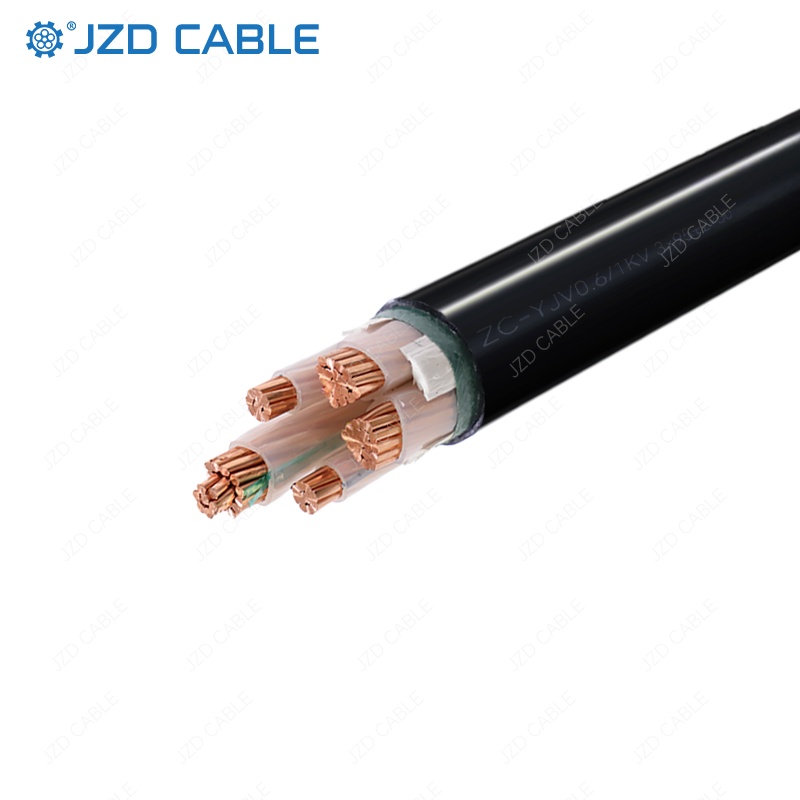


In construction projects across the Philippines and Southeast Asia, few engineering decisions affect electrical safety, efficiency, and service life as much as conductor selection.
In the Philippines, building wire selection is governed by the Philippine Electrical Code (PEC)—based on NFPA 70 and adopted by the IIEE and BEE. The PEC sets mandatory rules for conductor sizing, ampacity, correction factors, voltage drop, and installation methods across all new construction, renovation, and rewiring projects.
This guide provides a practical technical reference for building wire selection—grounded in PEC requirements and adapted to the tropical conditions of Southeast Asia.
Building Wire: Definition and Classification
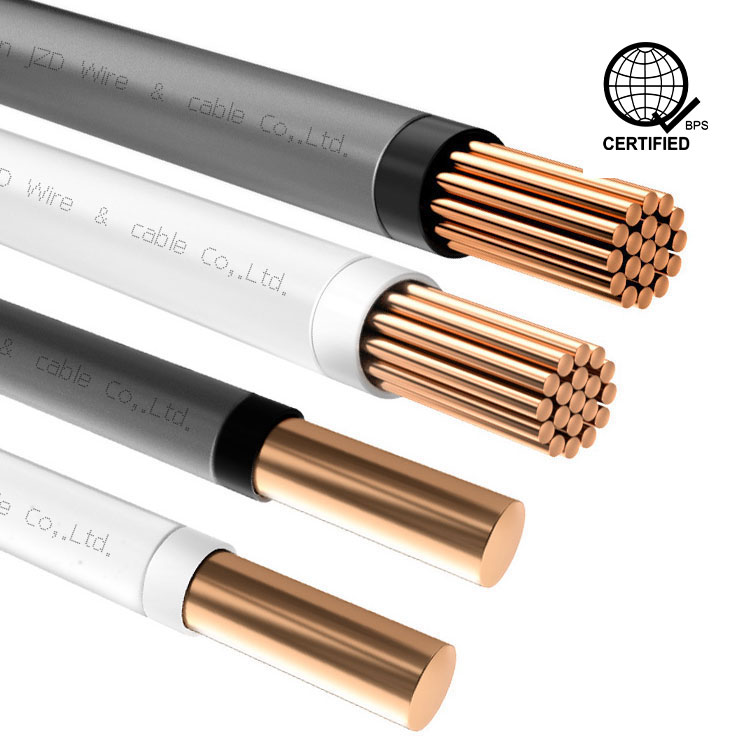
Building wire refers to single-conductor insulated wires used for permanent fixed installation in buildings, rated 600V, and installed in conduit, raceways, or cable trays. In the Philippine market, the PEC classifies building wires into several types, the most common of which are THHN, THWN, and THW.
1. THHN/THWN: Thermoplastic Wires with Nylon Jacket
THHN and THWN are the most widely used building wire types in commercial and residential projects today, both compliant with UL 83 (Thermoplastic-Insulated Wires and Cables) . Their core construction consists of PVC insulation plus a nylon outer jacket.
| Characteristic | THHN | THWN | THHN/THWN-2 |
| Dry Location Temp | 90°C | 75°C | 90°C |
| Wet Location Temp | Not rated | 75°C | 90°C |
| Nylon Jacket | Yes | Yes | Yes |
| Suitable Locations | Dry/damp | Wet/damp | Wet and dry |
| UL 83 Listed | Yes | Yes | Yes |
Key Distinctions:
- THHN: Suitable for dry and damp locations only. In outdoor conduit, underground, or any location where water accumulation is possible, straight THHN is not compliant.
- THWN: Rated 75°C in both wet and dry locations. In wet locations, ampacity must be based on the 75°C column.
- THHN/THWN-2: Dual-rated product, rated 90°C in both wet and dry locations. Its importance lies in the fact that original THWN is limited to 75°C in wet locations, while THWN-2’s 90°C wet rating allows the use of the higher ampacity column.
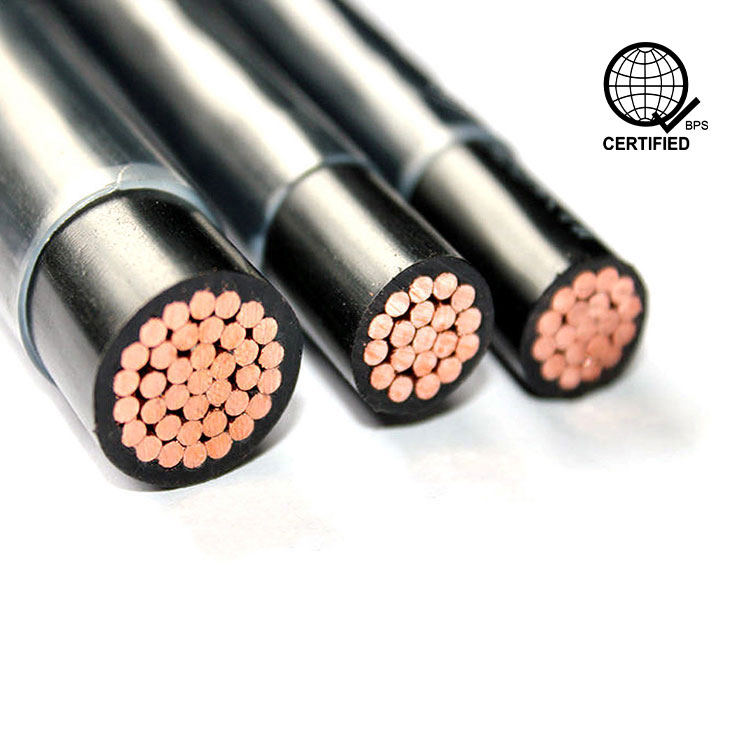
Engineering Value of the Nylon Jacket: The nylon jacket provides abrasion resistance, oil resistance, and gasoline resistance, protecting the insulation from damage during conduit pulls. THHN/THWN can be marked “Gasoline and Oil Resistant.”
2. THW: Thermoplastic Wire Without Nylon Jacket
THW is an earlier building wire type, used before nylon-jacketed wires became widespread.
| Characteristic | THW |
| Insulation | Thermoplastic PVC |
| Jacket | None (bare PVC) |
| Dry Temp Rating | 75°C |
| Wet Temp Rating | 75°C |
| Suitable Locations | Wet and dry |
| UL 83 Listed | Yes |
THW lacks a nylon jacket and provides no mechanical protection or oil resistance. In Southeast Asia’s tropical climate, the absence of a nylon jacket means THW is more vulnerable to damage during conduit pulls and ages faster in wet environments. While THW is still used in some markets, it is not recommended for new projects—the nylon protection and 90°C temperature rating of THHN/THWN-2 make it superior to THW in every engineering dimension.
3. Conductor Material Requirements
The PEC requires building wire conductors to be copper, soft-drawn and annealed, with a minimum conductivity of 98%. Some specifications require 99.9% or 99.99% pure copper. The minimum conductor size commonly used in engineering is 3.5 mm² (approximately 12 AWG) copper.
PEC Core Requirements for Conductor Selection
1. Minimum Conductor Sizes
The following table lists commonly used conductor sizes and their corresponding ampacities recognized by the PEC. Note that the “typical applications” in the table are engineering references—actual selection must be determined by combining the PEC’s 125% continuous load rule, installation location (dry/wet), ambient temperature, and termination temperature limitations.
| Conductor Size (mm²) | Approx. AWG | 60°C Ampacity (A) | 75°C Ampacity (A) | 90°C Ampacity (A) | Typical Application |
| 2 | 14 | 15 | 20 | 25 | Lighting circuits |
| 3.5 | 12 | 20 | 25 | 30 | Receptacles, small motors |
| 5.5 | 10 | 30 | 35 | 40 | Medium motors, feeders |
| 8 | 8 | 40 | 50 | 55 | Main supply, large motors |
| 14 | 6 | 55 | 65 | 75 | Large feeders |
| 22 | 4 | 70 | 85 | 95 | High-load feeders |
| 30 | 2 | 95 | 115 | 130 | Main distribution feeders |
| 38 | 1 | 110 | 130 | 145 | Large equipment feeders |
| 50 | Jan-00 | 125 | 150 | 170 | Large equipment/service entrance |
| 60 | Feb-00 | 145 | 175 | 195 | Heavy-load feeders |
| 80 | Mar-00 | 165 | 200 | 225 | Main circuits |
| 100 | Apr-00 | 195 | 230 | 260 | Service entrance |
The PEC requires a minimum conductor size of 3.5 mm² for lighting and power circuits. The above ampacities are based on an ambient temperature of 30°C.
2. The 125% Rule for Continuous Loads
PEC Articles 210.19 and 430.22 explicitly require: Conductors must be sized at 125% of continuous load current.
Engineering Implication:
A continuous load is defined as a load expected to operate for 3 hours or more continuously. For such loads, conductor ampacity must satisfy:
- 125% × continuous load current + 100% × non-continuous load current
- Practical Examples:
- A 10A continuous load air conditioner: must be sized at 10A × 1.25 = 12.5A
- A 30A continuous load motor: must be sized at 30A × 1.25 = 37.5A
Application Logic: Before applying temperature correction or conduit fill correction factors, the minimum conductor ampacity must reach 125% of the continuous load.
3. Overcurrent Protection Coordination
The PEC requires that the circuit breaker rating must not exceed the conductor ampacity. Standard breaker ratings include 15, 20, 25, 30, 35, 40, 45, 50, 60, 70, 80, 90, 100, 110, 125, 150, 175, 200, 225, 250, 300, 350, 400, 450, 500, 600A, etc.
4. Voltage Drop Limits
The PEC requires branch circuit voltage drop ≤3% , and total voltage drop (feeders + branch circuits) ≤5%. In long-distance installations, voltage drop often becomes the determining factor for conductor sizing.
Technical Considerations for Southeast Asia’s Tropical Environment
Having understood the general code requirements of the PEC, the next step is to apply these codes to the specific tropical environment of Southeast Asia. The region’s unique climatic conditions impose additional requirements on conductor selection and installation.
1. High Humidity and Wet Locations
The Philippines has a tropical monsoon climate with high temperatures year-round and high humidity during the rainy season. In tropical rainforest climates (such as Singapore), average temperatures reach 28°C with humidity ≥90%, where cable mold growth and heat dissipation issues require specialized engineering solutions.
Engineering Impact:
- In wet locations—underground conduit, outdoor installations, parking garages—THWN or THHN/THWN-2 must be used
- THHN alone is not suitable for wet locations
- In tropical high-humidity regions, XHHW-2 offers superior environmental durability compared to RHW-2
2. High Ambient Temperatures
PEC ampacity tables are based on 30°C ambient temperature. In high-temperature environments (rooftops, unventilated attics, mechanical rooms), temperature correction factors must be applied.
Engineering Practice: In tropical climates, ampacity derating due to elevated ambient temperatures can be as significant as derating from conduit fill.
3. Conduit Fill
PEC Part 1 (Table 10.1.1.1 / Chapter 9 Table 1) limits the maximum fill percentage of conduits:
| Number of Conductors | Maximum Allowable Fill |
| 1 | 53% |
| 2 | 31% |
| 3 or more | 40% |
The purpose of fill limits is to ensure adequate heat dissipation and prevent insulation damage during pulling.
4. System Voltage Differences
The standard residential voltage in the Philippines is 230V, 60 Hz—different from the 110V system used in the United States.
Engineering Implication: At the same power level, the 230V system in the Philippines draws approximately half the current of the 110V system in the U.S. Therefore, U.S.-sourced wire gauge tables cannot be applied directly to Philippine installations without voltage correction.
THHN/THWN Selection Engineering Decision Framework
1. Determining Factor 1: Installation Location
| Location Type | Recommended Wire Type | Technical Basis |
| Dry indoor, damp locations | THHN or THHN/THWN-2 | THHN rated 90°C dry |
| Wet locations (outdoor conduit, underground) | THWN-2 | 90°C wet location rating |
| Oil/coolant exposure | THWN-2 | 75°C oil/coolant rated |
| Underground conduit, embedded in concrete | THWN-2 | Mandatory for wet locations |
2. Determining Factor 2: Termination Temperature Limitation
Important Engineering Principle: Even if the conductor insulation is rated 90°C, when not all terminals and equipment in the circuit are rated 90°C, ampacity must be based on the 75°C column.
| Condition | Applicable Ampacity Column |
| All terminals and equipment rated 90°C | 90°C column |
| Terminals and equipment not all rated 90°C | 75°C column |
3. Determining Factor 3: Combined Application of Correction Factors 3
Conductor sizing must be calculated in the following order:
Step 1: 125% continuous load (see Section 2.2)
Step 2: Apply temperature correction factors
Step 3: Apply conduit fill correction factors
Final Selection: Take the larger value between Step 1 and Steps 2+3.
Common Sizing Misconceptions and Engineering Corrections
1. Misconception 1: Looking Only at Ampacity, Ignoring Temperature Rating
Mistake: Using THHN’s 90°C dry ampacity in wet locations.
Correction: THHN is only suitable for dry/damp locations. In wet locations, THWN or THWN-2 must be used.
2. Misconception 2: Ignoring Termination Temperature Limitations
Mistake: Conductor insulation rated 90°C, directly using the 90°C ampacity column.
Correction: Check the temperature rating of terminations and equipment. Unless all are rated 90°C, use the 75°C column. Ignoring this rule will result in undersized conductors that may overheat at terminations in service and fail inspection.
3. Misconception 3: Ignoring the 125% Continuous Load Rule
Mistake: Sizing directly from the equipment nameplate current.
Correction: Continuous loads (3 hours or more) must be sized at 125% of load current.
4. Misconception 4: Ignoring Ambient Temperature Correction
Mistake: Using 30°C standard ampacity in tropical climates.
Correction: Temperature correction factors must be applied based on actual ambient temperature.
5. Misconception 5: Using THW in New Projects
Mistake: Using non-nylon-jacketed THW to save cost.
Correction: THW lacks a nylon jacket and ages faster in tropical wet environments and is more vulnerable during conduit pulls. THW is not recommended for new projects—the nylon protection and 90°C temperature rating of THHN/THWN-2 make it superior in every engineering dimension.
Summary
Building wire selection is a multi-variable engineering decision process:
-
Determine load type: Continuous loads require 125% sizing
-
Confirm installation location: Wet locations require THWN-2
-
Check termination temperature: Non-90°C terminations limit to 75°C column
-
Apply correction factors: Temperature and conduit fill must be combined
-
Calculate voltage drop: Long-distance installations may require larger sizes
In Southeast Asia’s tropical climate, where high humidity, high temperatures, and corrosive conditions are the norm, THHN/THWN-2 dual-rated wire provides 90°C wet and dry temperature coverage with nylon jacket mechanical and chemical protection—making it the optimal choice for most modern construction projects.
Need BPS-certified or UL 83-listed THHN/THWN-2 wire for your Philippine project? Contact JZD Cable for free samples and technical specifications