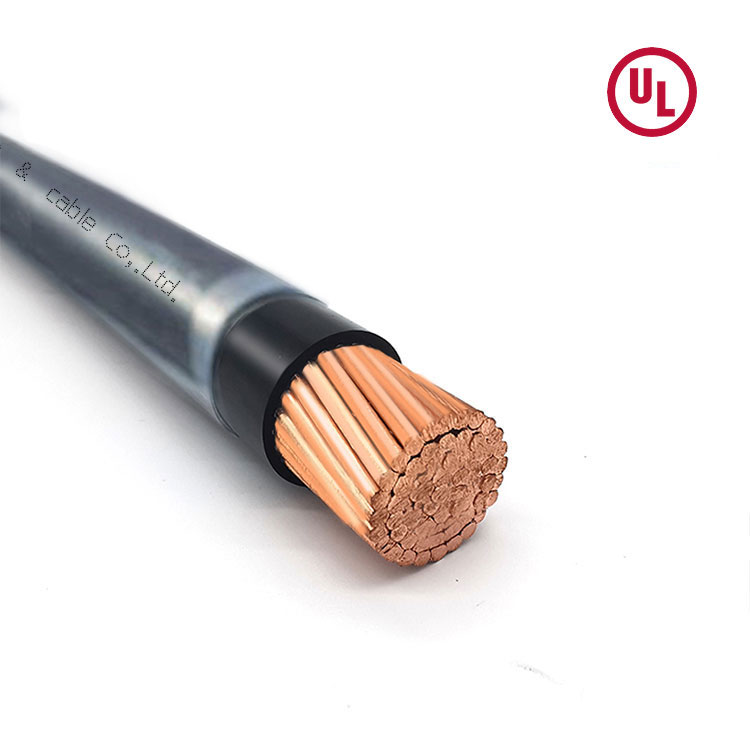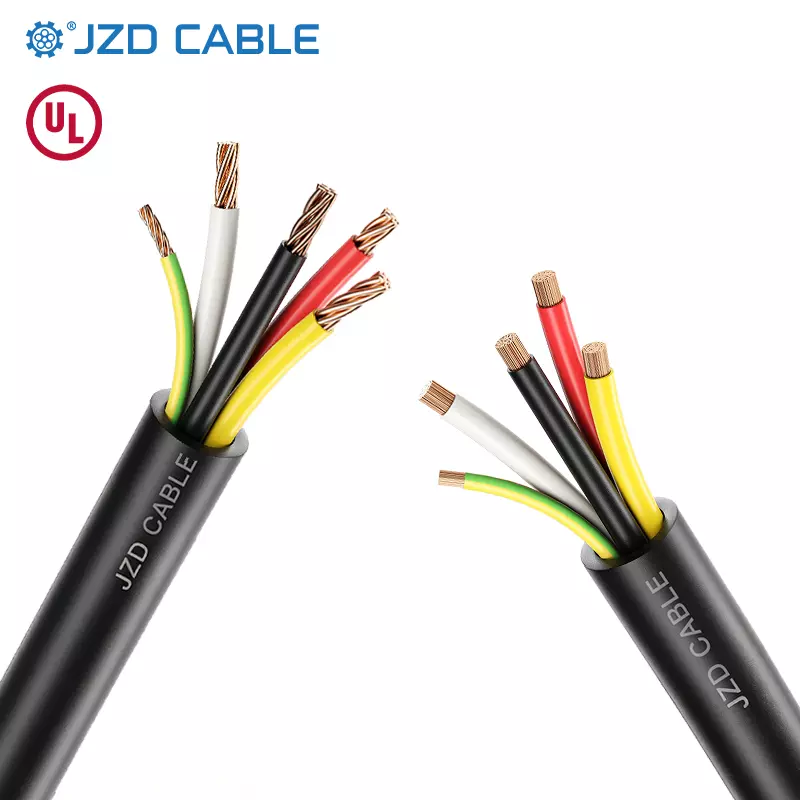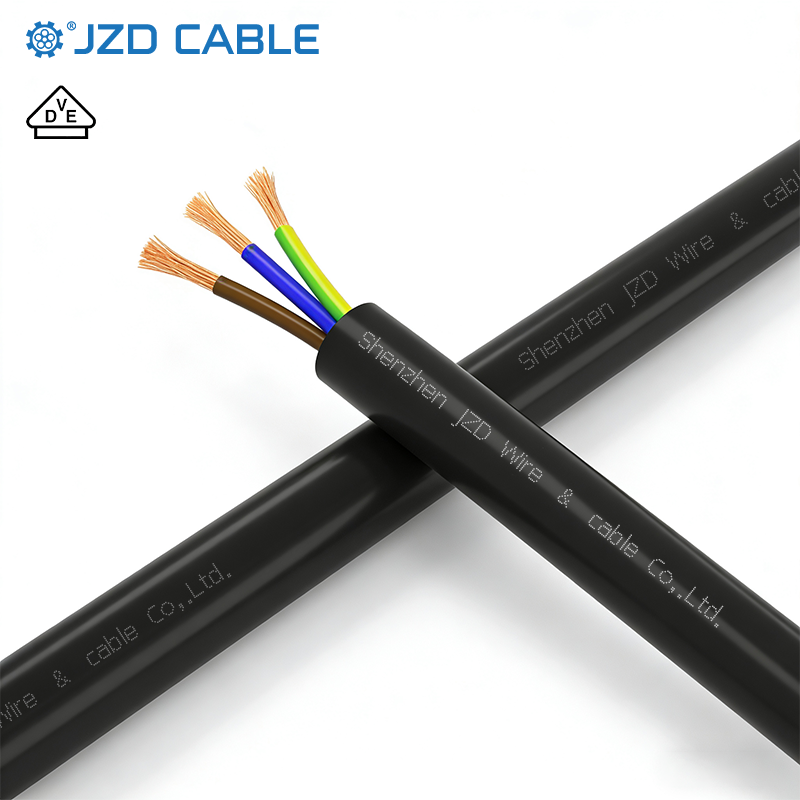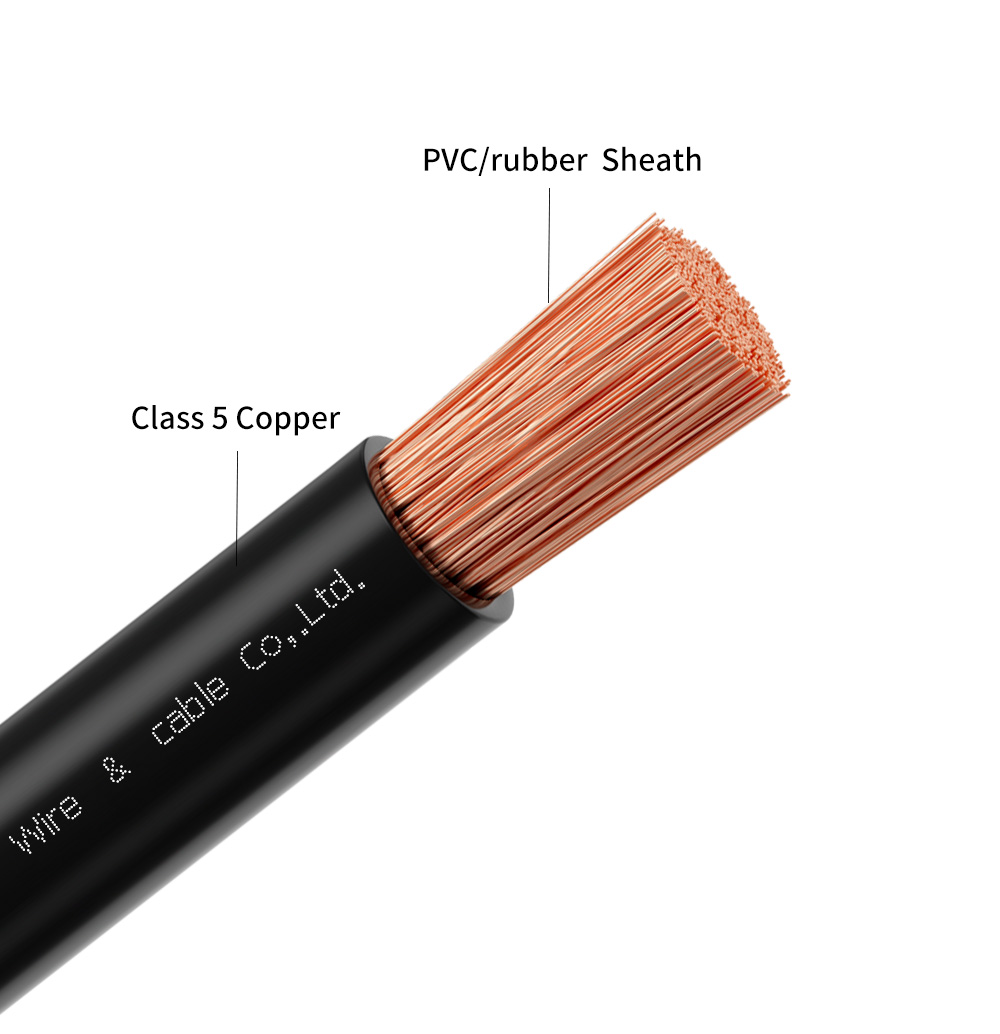


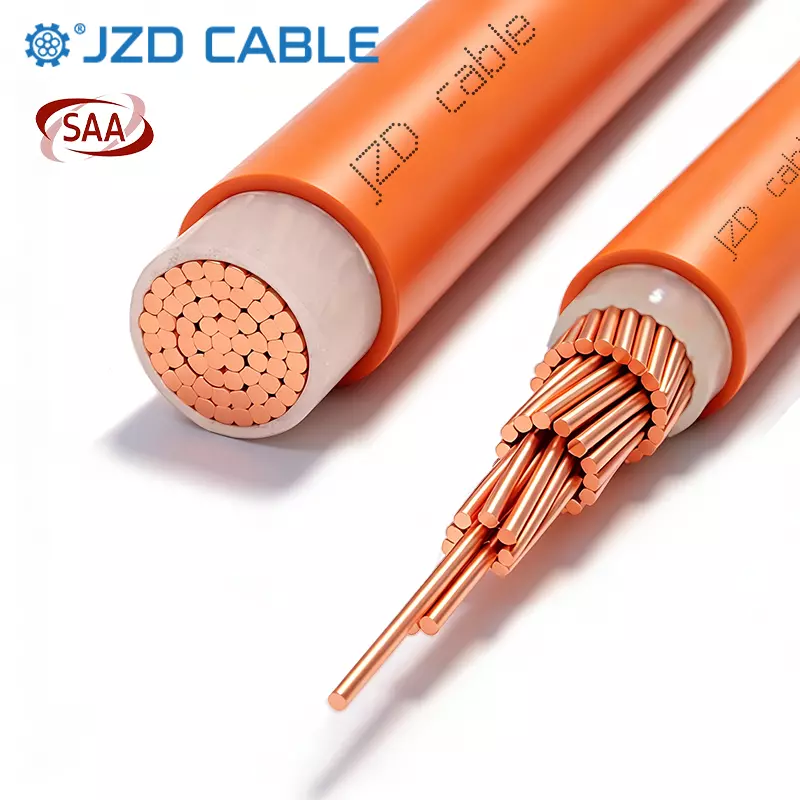
YJV cable—copper conductor, XLPE insulation, PVC sheath—is a low-voltage power cable widely used in commercial buildings, industrial plants, and infrastructure distribution. Its continuous operating temperature reaches 90°C, short-circuit withstand is 250°C for 5 seconds, and ampacity is 15%–30% higher than PVC-insulated cable of the same cross-section. But selection is not only about cross-section. Flame retardancy, conductor configuration, and ambient temperature derating all affect whether the cable meets project specifications and passes inspection.
Construction and Standards
1. XLPE Insulation and PVC Sheath
YJV cable uses cross-linked polyethylene (XLPE) insulation over copper conductors, with a PVC outer sheath. XLPE offers significantly better heat resistance than PVC: continuous operating temperature is 90°C, and short-circuit withstand reaches 250°C for up to 5 seconds.
The PVC sheath provides mechanical protection, moisture resistance, and flame retardancy. Where a higher fire rating is required, ZC-YJV adds Class C flame retardancy to both insulation and sheath.
2. Applicable Standards
YJV cable is typically manufactured to IEC 60502-1, with conductors per IEC 60228, covering extruded insulation power cables rated 1kV to 3kV. For projects in Australia and New Zealand, the SAA variant complies with AS/NZS 5000.1:2005 INC A1.
Both standards specify conductor construction, insulation thickness, sheath thickness, and test requirements.
Flame Retardancy: Class C vs. Standard YJV
1. Class C Test Requirements
Standard YJV has no flame-retardant rating. ZC-YJV adds Class C flame retardancy, tested to IEC 60332-3-24 for vertical flame spread of bunched cables.
The test uses a vertical ladder with multiple cable samples exposed to a specified flame. Flame application time is 20 minutes, and non-metallic material volume is 1.5 liters per meter. For Class C, flame spread must not exceed 2.5 meters above the ignition point, with no falling particles that ignite the floor.
This test simulates real grouped installation: multiple cables bundled in a tray or riser. If one cable ignites, Class C construction resists flame propagation to adjacent cables.
2. When Class C Is Required
Class C flame retardancy should be specified for grouped, high-power installations: main risers in commercial buildings, cable trays in industrial plants, and duct banks in data centers. In these locations, a single cable fault can quickly involve adjacent circuits.
For single-cable installations in open air, standard YJV may be sufficient. But for grouped installations in trays, ducts, or vertical shafts, Class C is the appropriate choice.
Once flame retardancy is determined, conductor configuration determines the cable’s application.
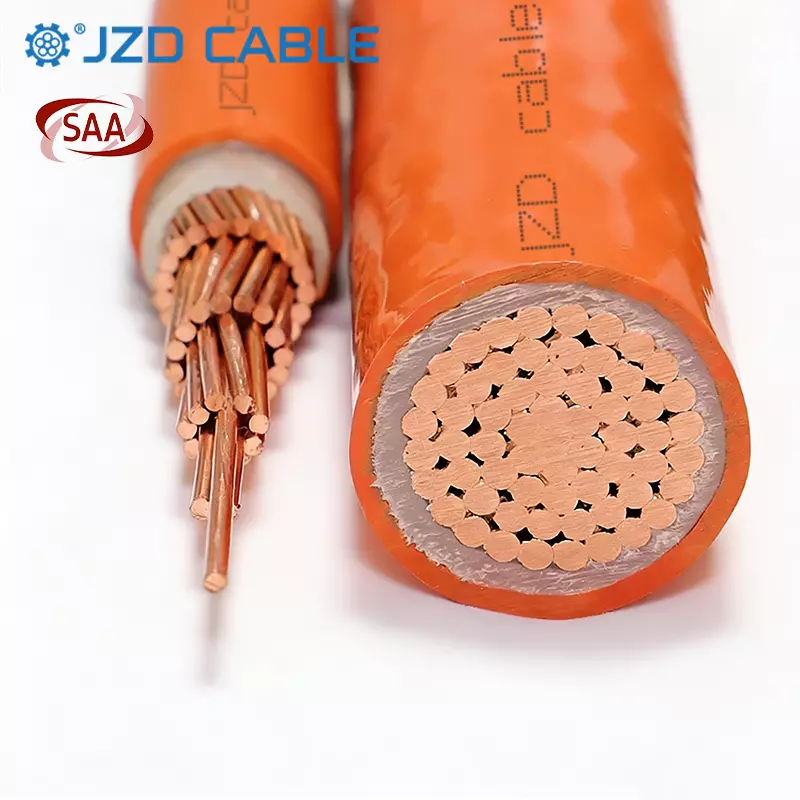
Configuration: 4×95+2×50 mm²
1. What the Numbers Mean
A 4×95+2×50 mm² configuration contains four 95 mm² phase conductors, one 50 mm² neutral, and one 50 mm² protective earth (PE) conductor. All conductors are high-conductivity copper.
This is a three-phase, four-wire plus earth configuration. It is used in three-phase systems requiring a separate neutral and a substantial PE conductor, capable of handling high and potentially unbalanced loads.
2. Applications
This configuration is used for main feeders from the service entrance to distribution panels in large buildings, industrial power distribution for heavy machinery, and critical facilities such as hospitals and data centers where separate neutral and PE conductors are required. The 50 mm² PE conductor carries fault current safely until overcurrent protection operates.
When the neutral may carry harmonic currents from non-linear loads—such as data centers or facilities with VFD-driven equipment—the separate neutral conductor prevents overload of the PE conductor.
Once conductor configuration is determined, ampacity and derating are the next key selection factors.
Ampacity and Temperature Derating
1. 90°C Continuous Operation
XLPE insulation allows continuous conductor operation at 90°C. For a 95 mm² copper conductor in air, continuous ampacity is approximately 250–280 A, depending on installation conditions. For the same cross-section, YJV ampacity is 15%–30% higher than PVC-insulated cable.
2. Derating Factors
Standard ampacity tables are based on specific ambient temperatures and installation conditions. In practice, the following corrections apply:
Ambient temperature. For direct burial and duct installation, the base ambient temperature is 25°C; for tunnel and trench installation, it is 40°C. When ambient temperature exceeds the base value, the correction factor is calculated as K₁ = (90-θa)/(90-θbase). At 40°C ambient, the correction factor for XLPE insulation is approximately 0.91.
Soil thermal resistivity. For buried installation, soil thermal resistivity affects heat dissipation. At a thermal resistivity of 1.2 K·m/W, the correction factor is 1.15; at 0.8, it is 1.21. Moist soil conducts heat better than dry sand or gravel.
Grouping. When multiple cables are installed in the same tray or duct, heat dissipation worsens. Correction factors include the parallel installation factor K₃ and the filling factor K₅. For six cables in a tray, the grouping factor may be 0.80 or lower.
Before selecting cross-section, calculate the corrected ampacity. If the corrected value is below the design load current, a larger cross-section is required.
Conclusion
Key YJV selection factors: XLPE insulation for 90°C operation, Class C flame retardancy (IEC 60332-3-24) for grouped installation, conductor configuration matching system design, and ampacity correction for ambient temperature, soil thermal resistivity, and grouping. Confirm IEC 60502-1 or AS/NZS 5000.1 compliance. Conductors: annealed copper per IEC 60228.
For specifications or test reports, contact us.
FAQ
1. What type of cable is YJV?
A low-voltage power cable with copper conductor, XLPE insulation, and PVC sheath, rated 0.6/1 kV.
2. Which is better, PVC or XLPE?
XLPE for higher temperature and ampacity (90°C vs. 70°C); PVC for lower cost and lighter duty.
3. What are the four types of cables?
By application: power, control, communication, and instrumentation cables.