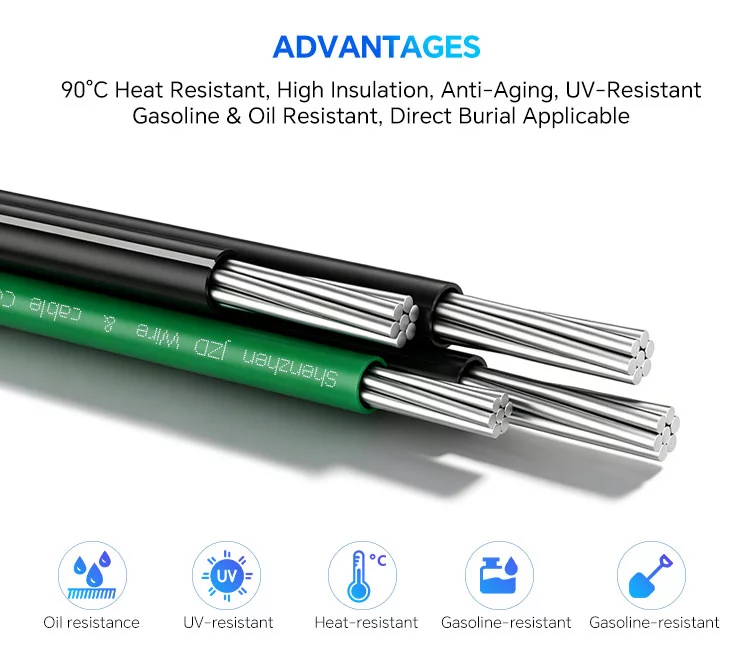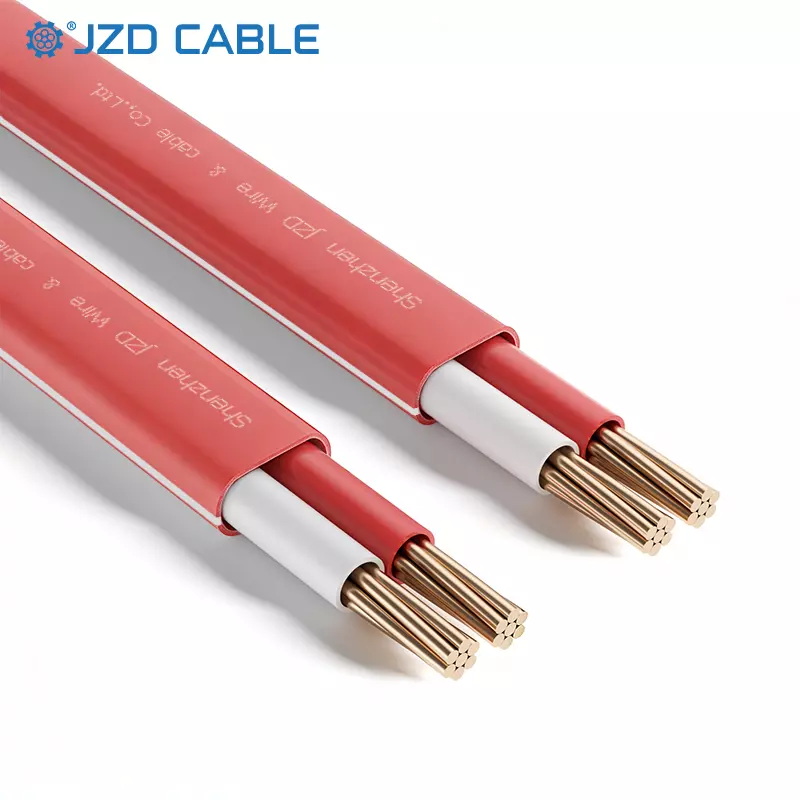


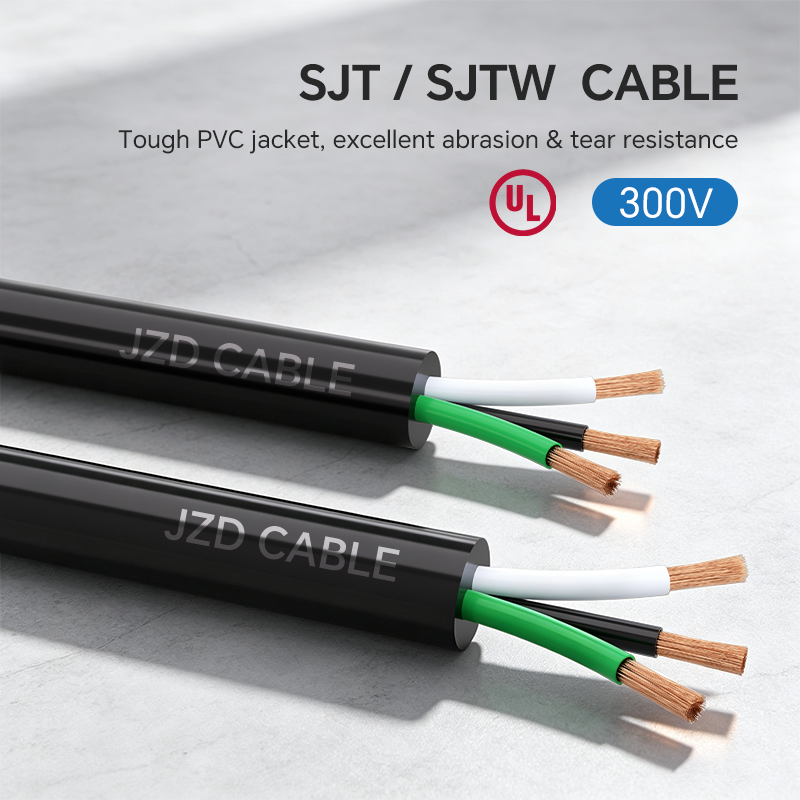
In industrial equipment power, temporary construction site wiring, and outdoor equipment connections, portable cords are consumables—but not disposable. From the same batch, some cords stay flexible for two or three years, while others harden, crack, or break at the bend within three months.
SJT, SJTW, and STW are the three most common portable cord types under UL 62. They look similar and their prices are close, but they suit different environments. Choose the wrong type, and service life can differ several times.
Model Codes: What the Letters Mean
Each letter in SJTW has a specific meaning. S stands for Service, J for Junior (300V class), T for Thermoplastic (PVC), and W for Weather-resistant.
Without J, the voltage rating is 600V. Without T, the jacket is rubber. Without W, the cord is not rated for outdoor weather exposure.
O stands for oil-resistant. A single O means only the outer jacket is oil-resistant; a double O means both conductor insulation and outer jacket are oil-resistant.
These letters are not marketing labels. They are actual ratings printed on the jacket, and they directly determine whether the cord can be used in a specific environment.
Conductor Construction Determines Fatigue Life
The flexibility of a portable cord comes from its conductor stranding. SJT, SJTW, and STW typically use Class K stranded conductors, with fine individual strand diameters and a high strand count. For 12 AWG, a typical Class K construction is 65 strands of 0.26 mm copper.
If coarser stranding is used, surface strain during bending increases, and fatigue life can be reduced by several times. No matter how thick the jacket, if the conductor is coarsely stranded, individual copper strands will still fatigue and break under repeated bending.
On site, judging whether a cord is suitable for moving applications by its conductor stranding is more reliable than judging by jacket thickness.
Jacket Material Determines How Long It Lasts
1. Limits of PVC Jackets
SJT and SJTW both use PVC jackets. PVC flexibility comes from plasticizers. Under long-term heat exposure and oil contact, plasticizers migrate from inside to the surface, where they are dissolved by oil or volatilized, causing the jacket to harden, shrink, and crack. UV exposure also accelerates photo-oxidative degradation of PVC molecular chains.
SJT has no W rating, so it is not weather-resistant or waterproof. It is suitable only for indoor appliances and office equipment. Under UV exposure, the SJT jacket ages quickly and is not suitable for outdoor use.
SJTW adds a weather-resistant rating, making it suitable for outdoor and wet locations. Some products are marked SJTW-A, indicating they have passed sunlight resistance certification.
2. STW Jacket: Thermoplastic, Not Rubber
STW has no J and is rated 600V. Because it carries T, its jacket is thermoplastic, not rubber. The W rating provides weather resistance. Rubber jackets are indicated by the absence of T, for example in SOOW-type constructions, not by STW. Rubber forms a three-dimensional network through chemical cross-linking and does not rely on plasticizers for flexibility. It resists plasticizer migration when exposed to oil, ozone, and chemical solvents and remains flexible at -40°C.
A PVC jacket may harden and crack within months in an oily environment, while rubber-jacketed construction can last for years. The higher initial unit price of a rubber-jacketed construction may be offset by a longer replacement cycle. For STW, select based on its actual thermoplastic compound and O rating.
Ampacity Cannot Be Taken Directly from the Table
Allowable ampacity for portable cords is based on NEC Table 400.5, with a baseline ambient temperature of 30°C and no more than three current-carrying conductors.
When ambient temperature exceeds 30°C, derating is required per the temperature correction factors in Table 310.16. The correction factor K is calculated as:
K = √[(Tc – Ta) / (Tc – 30)]
Where Tc is the conductor temperature rating (90°C) and Ta is the actual ambient temperature. At Ta = 40°C, K ≈ 0.91. At Ta = 45°C, K ≈ 0.87.
When more than three current-carrying conductors are bundled, further derating applies per Table 400.5: 80% for 4–6 conductors, 70% for 7–9, and 50% for 10–20.
For 12 AWG copper, the baseline ampacity at 30°C is about 20 A. In a 40°C outdoor environment, the ambient temperature correction factor is about 0.91. If the cord contains 7 current-carrying conductors, the bundling correction factor is 0.70. The combined corrected allowable ampacity is approximately 20 × 0.91 × 0.70 ≈ 12.7 A. If 20A is used directly for selection, the cord may operate above its allowable ampacity.
Which Cord for Which Application
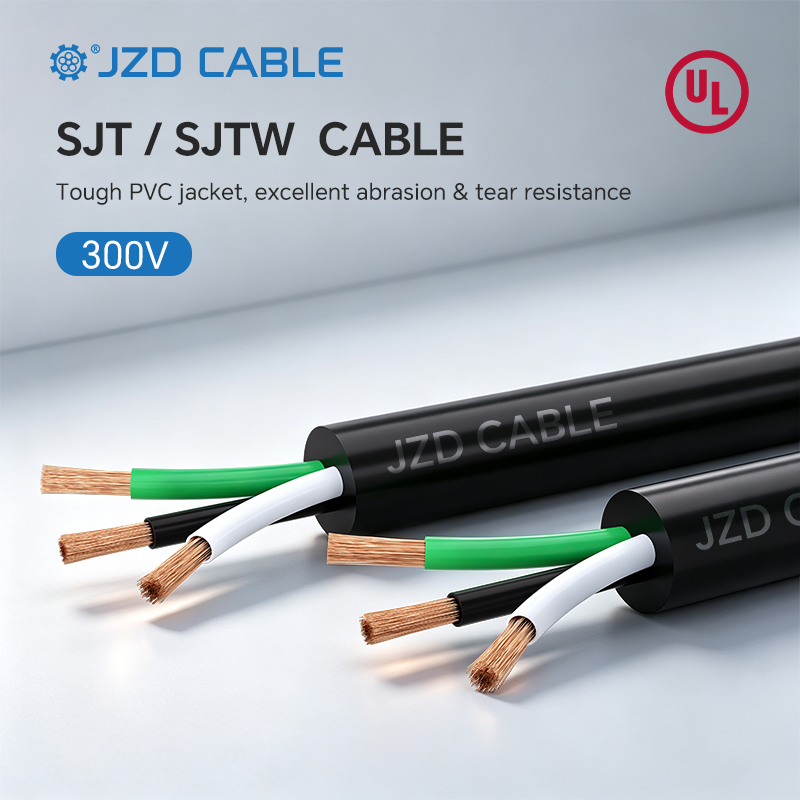
Construction sites, outdoor tools, and temporary lighting require weather resistance and abrasion resistance. Voltage is typically 120V or 240V, in the 300V class. SJTW is the standard choice. If oil or chemical exposure is present, or winter temperatures are consistently below -20°C, consider SJTOW or another confirmed oil-resistant/low-temperature type. STW is thermoplastic, not rubber, so its low-temperature and oil performance must be verified.
Cold storage and cold chain loading areas have ambient temperatures consistently below -20°C. PVC jackets approach their flexibility limit. Rubber-jacketed constructions, which do not carry T, remain flexible at -20°C and are often the standard choice for these environments. STW is thermoplastic, so verify its low-temperature flexibility before use.
Refineries, chemical plants, and mines combine oil, solvents, ozone, and mechanical wear. These environments accelerate PVC jacket aging. Rubber-jacketed constructions without T resist plasticizer migration and typically last longer. STW is thermoplastic; for oil resistance, specify an O suffix such as STOW, and verify chemical compatibility.
Mobile equipment and temporary distribution panel feeders: when equipment voltage exceeds 300 V, SJTW is no longer suitable. SJTW is rated 300V; STW is rated 600V. Using a 300V cord on 480V equipment is a serious violation.
Indoor dry environments: office equipment and household appliances with no oil and no direct sunlight can use SJT, without paying extra for a W rating.
Selection Verification Points
When choosing SJTW, SJT, or STW, confirm the following:
- UL 62 listing covering complete finished-product test requirements
- Jacket material matches the type designation: T for thermoplastic, not rubber; no T for rubber. STW contains T and is therefore not a rubber-jacketed cord.
- Voltage rating matches the equipment: SJT/SJTW 300V, STW 600V
- Conductors are stranded bare copper, meeting Class K or equivalent flexible conductor requirements
- Weather-resistant rating confirmed for outdoor use
- Oil-resistant rating confirmed, distinguishing single O from double O
- Batch consistency in jacket thickness, conductor stranding, and marking
If you need help matching SJT, SJTW, or STW cord to a specific application, contact us for selection support, certification documents, or bulk supply.