

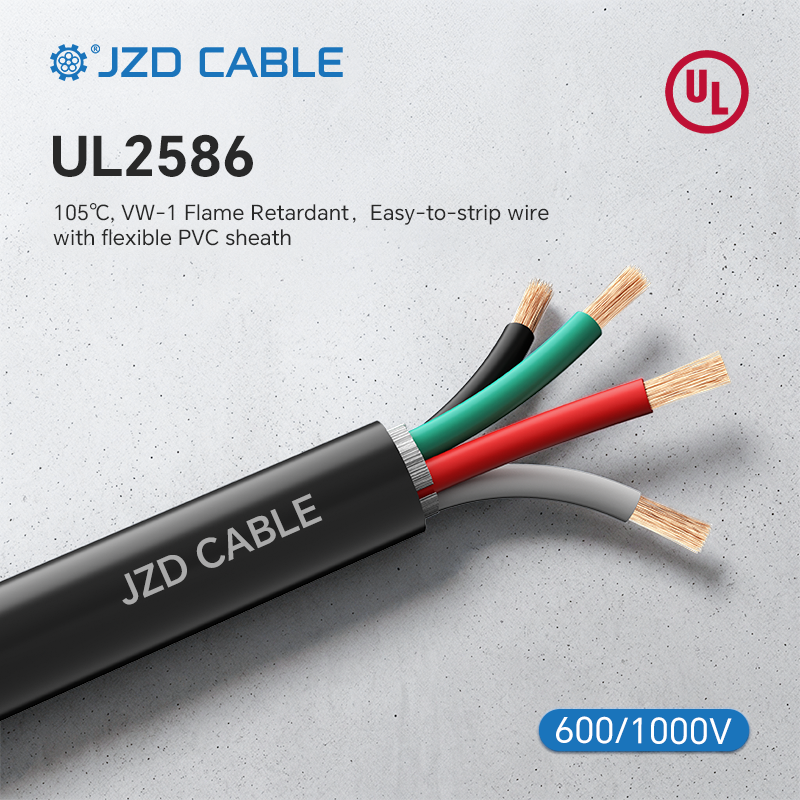
Internal wiring failures often stem from selection errors. While UL 1185, UL 2468, and UL 2464 all meet UL 758 standards, their physical constructions differ. Choosing the wrong style may work short-term, but long-term stress and EMI will cause premature failure. Here is the engineering breakdown.
UL 2464: The Comprehensive Solution for Industrial Control
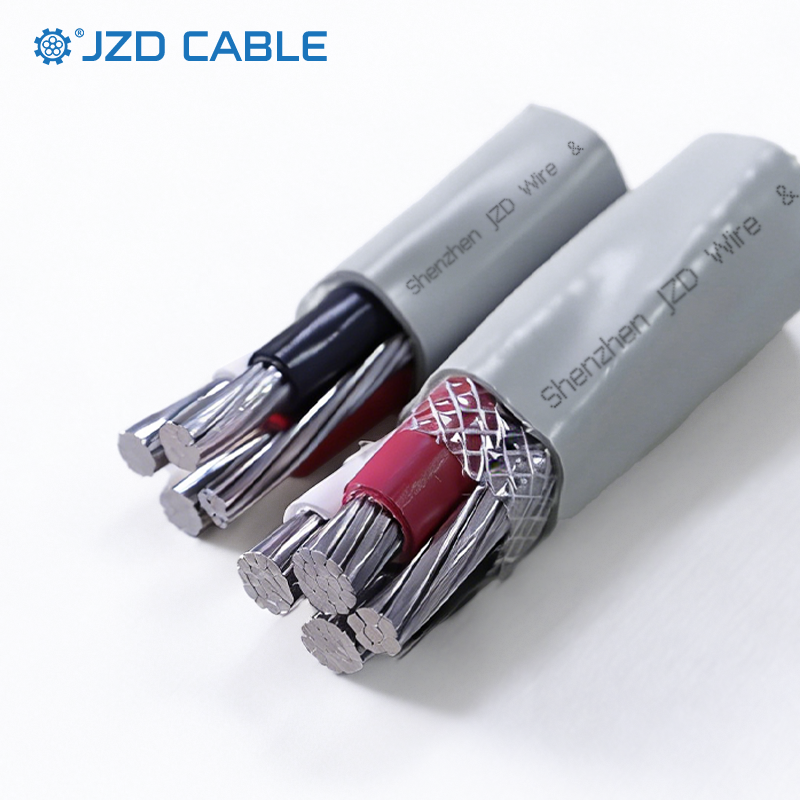
On factory floors, automated production lines, and cross-equipment connections inside cabinets, UL 2464 is the most reliable choice. It is not just a standard round wire; it is a multi-core cable systematically optimized for complex working conditions.
1. Structural and Mechanical Advantages
UL 2464 uses finely stranded copper conductors (e.g., Class 5 stranding), PVC insulation, and a thick PVC outer jacket. This structure gives it excellent fatigue resistance. Compared to a single solid core, finely stranded conductors distribute bending stress across hundreds of fine wires, effectively preventing metal fatigue and breakage.
2. Solving EMC Pain Points
Industrial sites are filled with VFDs, servo motors, and heavy relays, creating a harsh electromagnetic environment. The round construction of UL 2464 makes it easy to add a braided or foil shield (e.g., 85% tinned copper braid coverage). This shield provides a low-impedance return path and blocks high-frequency interference from corrupting weak control signals (crosstalk). Using an unshielded flat cable in this environment guarantees signal loss and equipment malfunction.
3. Mechanical Protection and Heat Dissipation
The outer PVC jacket is more than a physical barrier; it resists oil, coolant, and friction on the factory floor. Meanwhile, the round shape dissipates heat much better than tightly packed flat ribbons, preventing thermal buildup when multiple current-carrying conductors are crammed into a closed cable tray.
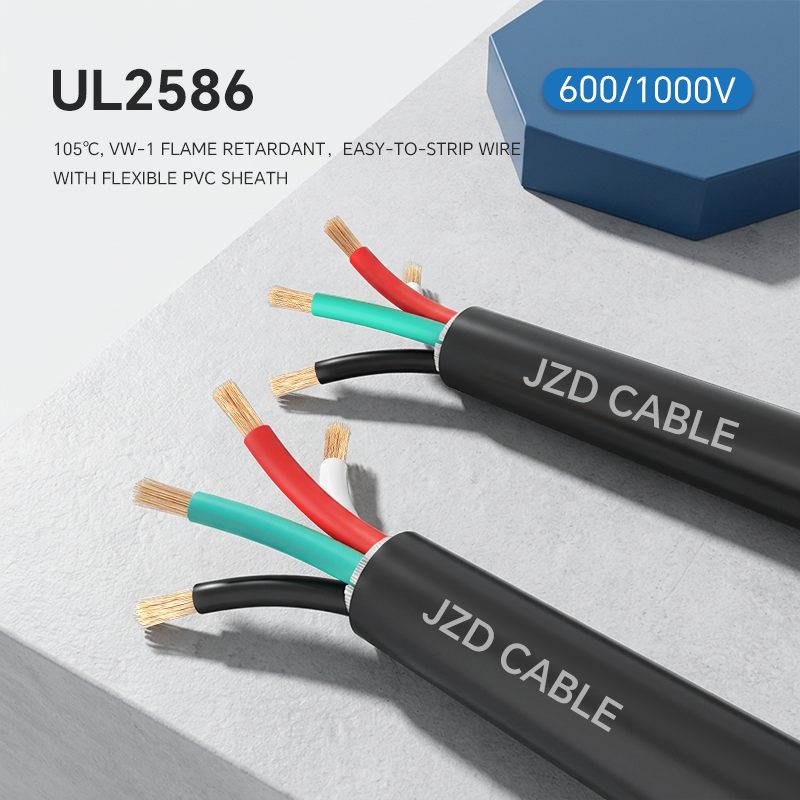
UL 1185 and UL 2468: The “Compromises” and “Specializations” of Internal Wiring
1. UL 1185: The Single-Signal Shielding King
If you only need to transmit a single, extremely weak signal (like high-frequency audio or a precision sensor output), the single-core shielded structure of UL 1185 provides the optimal signal-to-noise ratio. However, because it is a single core with heavy shielding, the cable is relatively stiff. It is highly prone to fatigue fracture under frequent bending or vibration. Therefore, it should be locked inside static equipment enclosures.
2. UL 2468: The Space-Constrained Compromise
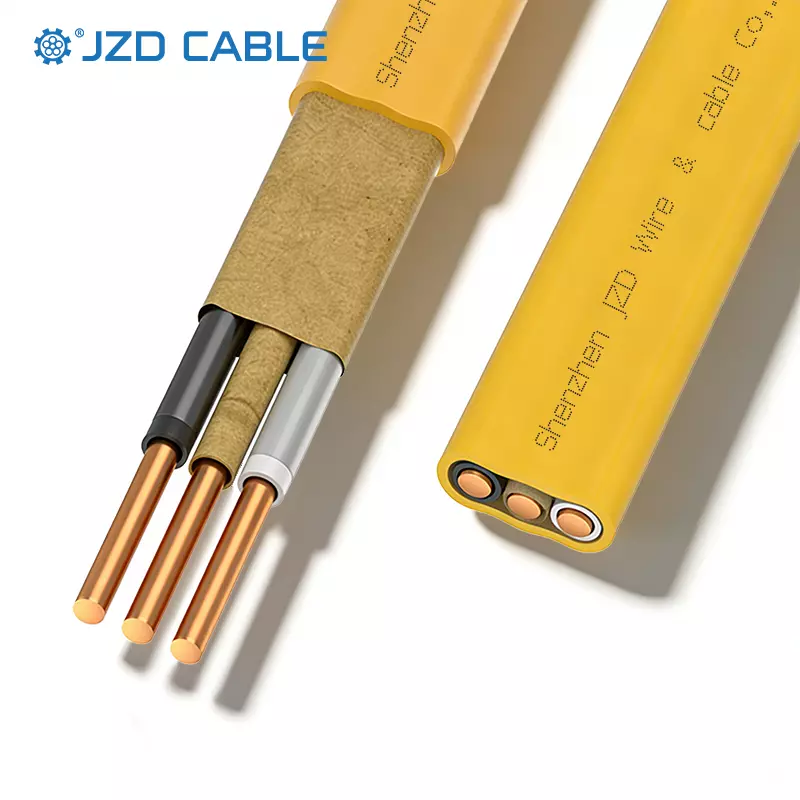
Inside server racks or consumer electronics, space is at a premium. UL 2468 (flat ribbon) is often the only thing that fits the gap, allowing for rapid termination using IDC (Insulation-Displacement Contact) connectors.
Engineering Trap: UL 2468 has almost zero EMI resistance, and the flat structure tears easily under lateral stress. It is strictly for static internal wiring. Once it crosses cabinets or runs near power cables, the flat ribbon acts as an antenna, absorbing noise and radiating interference.
Selection Decision Matrix: Engineering Parameters
| Evaluation Dimension | UL 1185 (Single-Core Shielded) | UL 2468 (Flat Ribbon) | UL 2464 (Multi-Core Round) |
| EMI Shielding | Excellent (single signal) | Poor (susceptible to crosstalk) | Excellent (overall multi-core shield) |
| Fatigue Resistance | Poor (single core, stiff) | Extremely Poor (tears easily) | Excellent (stranded + PVC jacket) |
| Heat Dissipation | Moderate | Poor (tightly packed) | Good (round structure) |
| Termination | Complex | Fast (IDC crimping) | Standard (strip and crimp) |
| Suitable Condition | Static internal single-signal | Extreme space constraints | Cross-cabinet, oily, vibrating |
Compliance and Supply Chain Verification
For demanding industrial projects, confirming UL 758 compliance is just the baseline. You must verify specific parameters:
- Temperature & Voltage: UL 2464’s standard rating is 80°C / 300V. Confirm it matches the heat buildup inside your specific cabinet.
- Flame Rating: Regardless of the style, the jacket must pass the VW-1 vertical flame test to prevent a local short circuit from turning into a cabinet fire.
- Shield Coverage: For UL 2464 used in servo or VFD environments, shield coverage (braid density) should typically be 85% or higher.
Conclusion
There is no “one-size-fits-all” cable, only “scenario adaptation.” Use UL 2468 for extreme thinness, and UL 1185 for single-signal shielding. But for industrial control environments filled with oil, vibration, and EMI, the multi-core, shielded, and heavily jacketed UL 2464 is the engineering cornerstone for long-term system stability.
Avoid on-site traps by selecting the right cable from the start. For detailed UL 2464 AWM specifications, certification documents, or to request a free sample for on-site evaluation, please contact us.