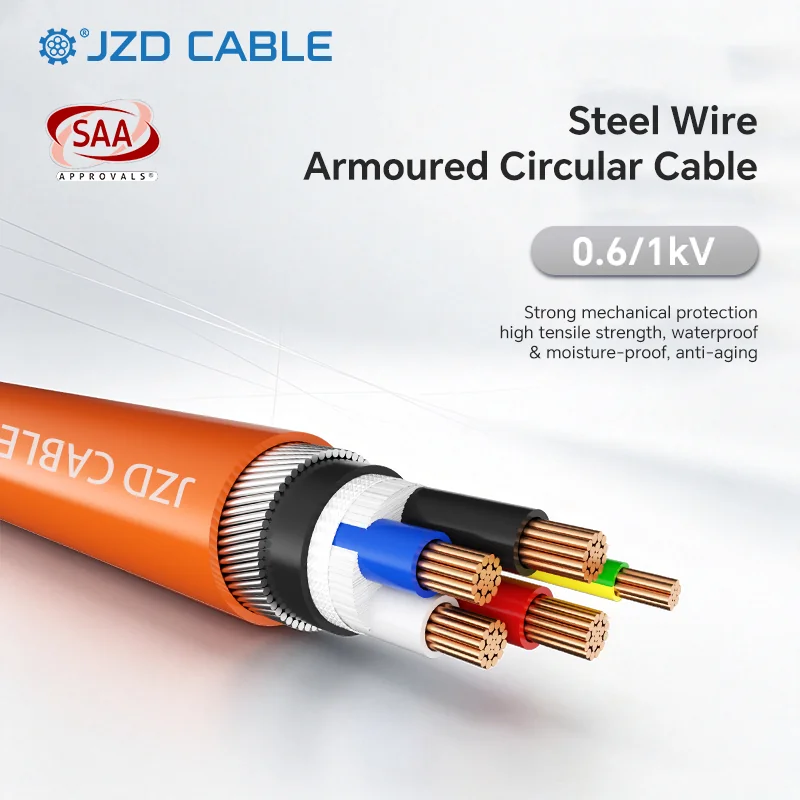


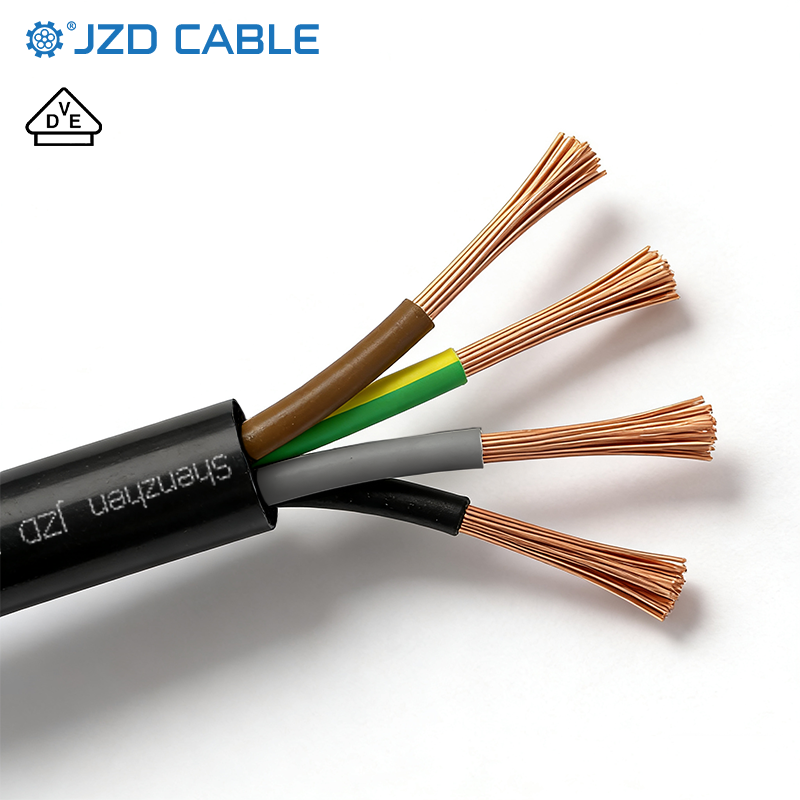
In industrial projects, overlooking the jacket material is a costly mistake. Rubber and PVC cables may look identical, but their lifespan differs drastically. Since PVC is a thermoplastic and rubber is a cross-linked elastomer, you can’t judge by feel alone. Proper selection requires evaluating four core dimensions: load, mechanical stress, environment, and voltage.
What Are PVC and Rubber Cables?
1. PVC Cable (e.g., H05VV-F)
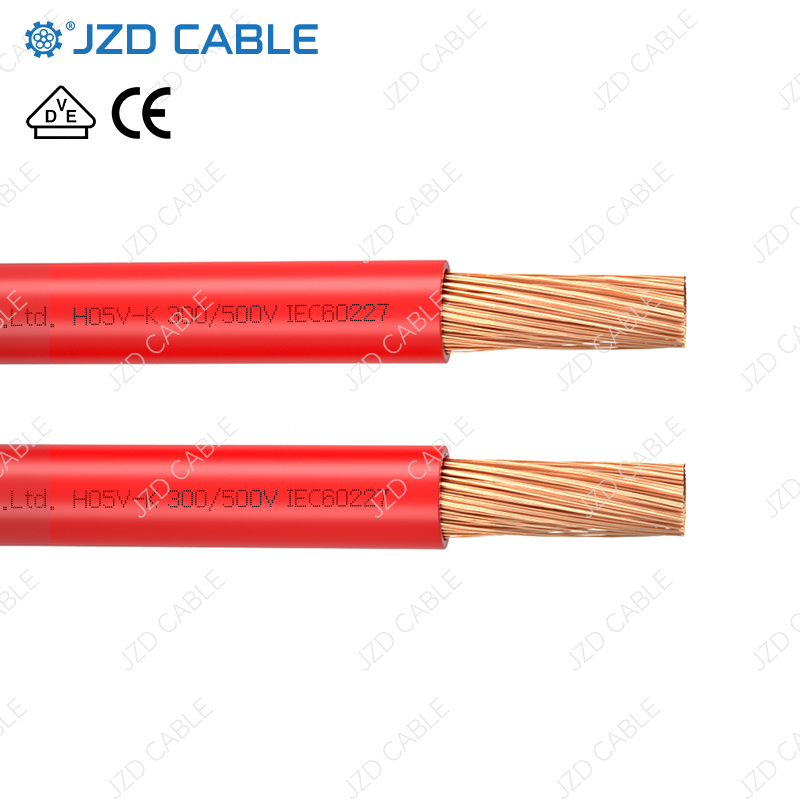
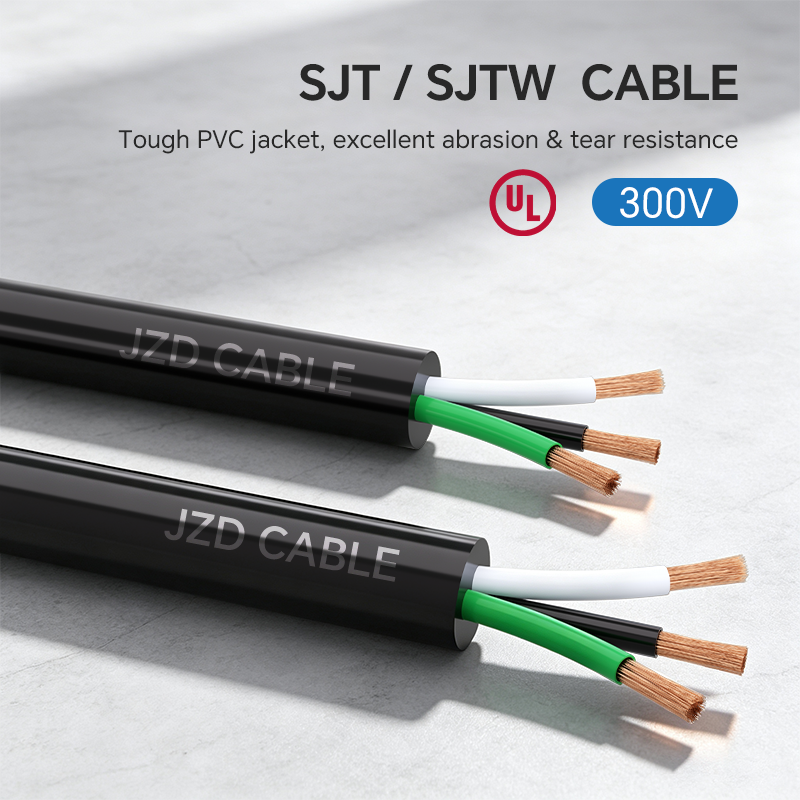
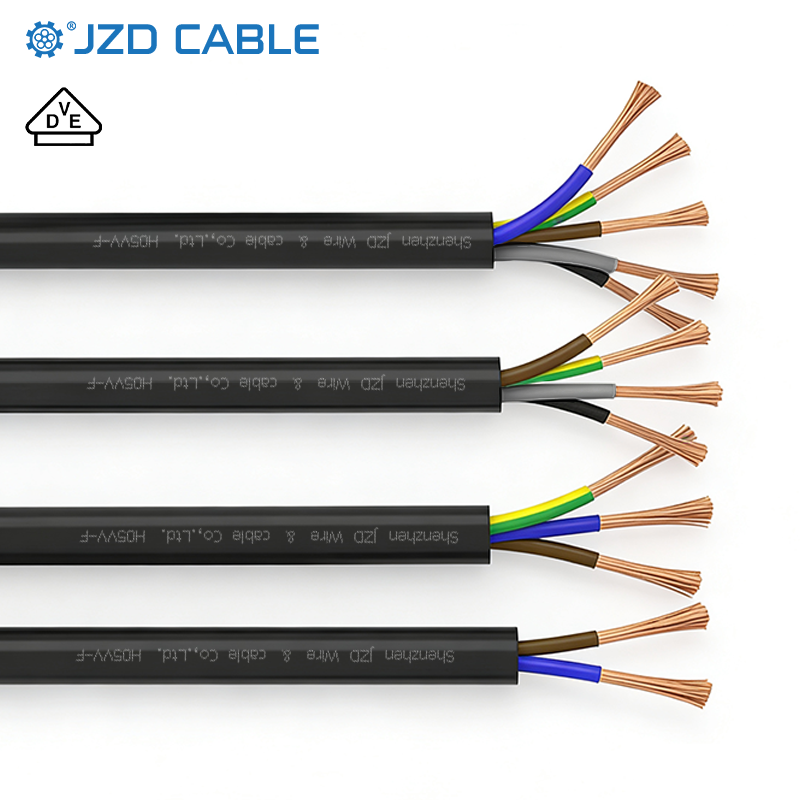
H05VV-F is the familiar “plastic-jacketed wire. “It’s low-cost, easy to manufacture, and its flexibility relies entirely on plasticizers in the formula. In fixed installations or standard indoor environments, it is the absolute king of cost-effectiveness. The catch? When exposed to heat or continuous mechanical force, plasticizers evaporate, and the jacket quickly turns hard and brittle.
2. Rubber Cable (e.g., H05RR-F)
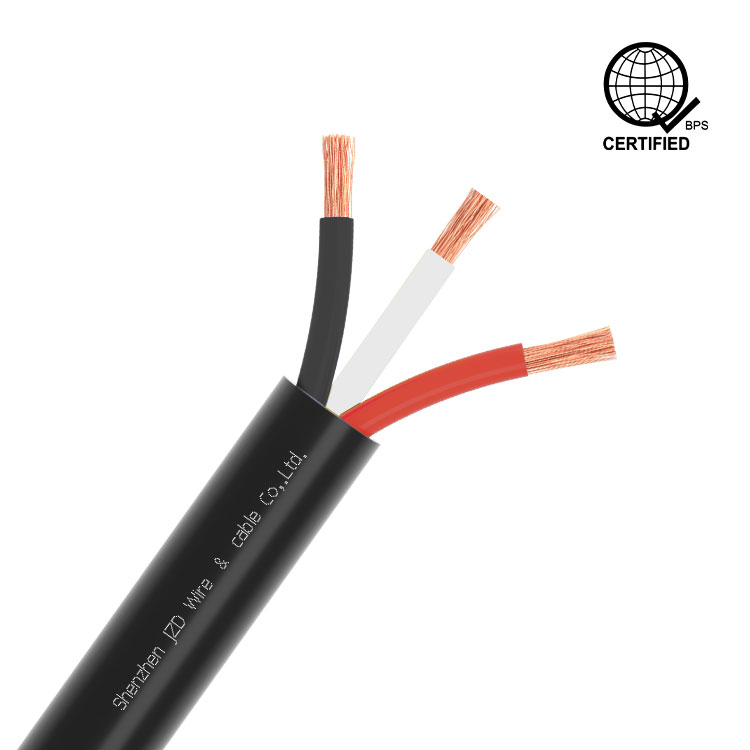
Here, the insulation and sheath are made of natural or synthetic rubber. Rubber relies on chemical cross-linking—think of it as a 3D web inside the material—giving it tremendous elasticity and rebound. H05RR-F (300/500V) is specifically engineered for light-duty equipment that gets moved and bent frequently.
With the material fundamentals clear, let’s look at the matchup in real-world applications.
Load: Does PVC Hold Up Under Continuous Heat?
Once a machine starts running, the conductor heats up.
PVC is a thermoplastic. Under continuous high current or frequent starts/stops (like heavy-duty motors), high temperatures will soften the insulation. Bake it long enough, and the insulation ages rapidly. If your equipment runs at full load for long periods, standard PVC is not the most reliable choice.
Rubber handles this much better. Even as temperatures rise, H05RR-F maintains its structural stability—it won’t soften or deform. Whether it’s short-term overloads or high heat generation, rubber gives you a much higher thermal safety margin.
Mechanical Stress: Who Snaps Their Copper Strands First?
On site, if a cable is constantly dragged on the floor, coiled, or vibrating with a hand-held tool, PVC’s weaknesses show up fast. The flexibility provided by plasticizers degrades under repeated pulling, causing permanent stretching. Once the jacket stretches, the fine copper strands inside face concentrated stress and eventually snap at the connectors or bending points.
This is where rubber’s cross-linked structure shines. Bending and twisting are absorbed like a rubber band, and it bounces right back, protecting the copper strands from internal damage.
Field Tip: Don’t assume any “rubber” cable can take a beating. H05RR-F is a light-duty rubber cable (minimum bending radius of 6x diameter), suited for hand-held tools. If it’s being dragged across steel plates or run over by carts on a construction site, you need to upgrade to H07RN-F with a heavy-duty neoprene jacket. That’s the one built to take a hit.
Environment: Cold Brittleness and the Oil Trap
For outdoor projects in northern winters or equipment near cold storage, the jacket takes a beating. Below -15°C, standard PVC becomes stiff and brittle. Bend it, and the jacket cracks. Rubber (like H05RR-F) stays flexible down to -25°C and generally outperforms PVC against UV and ozone aging outdoors.
Field Trap: “Rubber” doesn’t mean universal resistance. The standard rubber used in H05RR-F is actually not very oil-resistant! In a mechanic’s shop or an oily environment, oil will cause it to swell. You must switch to H05RN-F (neoprene jacket) for oil resistance—don’t just grab any “rubber cable” and assume it will work.
Voltage: The Physical Red Line of Insulation Thickness
H05RR-F is rated at 300/500 V. Do not cross this red line. Its insulation thickness and 2000V test voltage are meant for standard appliances and small power tools.
If the equipment is a 380V three-phase industrial motor, or if it needs to tie into a 450/750V power system, H05RR-F’s insulation simply won’t handle it. You must step up to a 450/750V rated cable like H07RN-F, or an industrial cable with an equivalent voltage rating.
Selection Decision Matrix
To sum it up, here is the selection logic for different site requirements:
| Evaluation Dimension | Fixed Equipment / General Use (PVC) | Mobile Light-Duty / Cold Environments (H05RR-F) | Heavy Drag / Oily Harsh Environments (H07RN-F) |
| Equipment Load | Continuous, stable, low heat | Medium-low, frequent starts/stops | High load, inrush current |
| Mechanical Stress | Fixed after installation, no pulling | Frequent movement, bending, light dragging | Heavy dragging, crushing, continuous flexing |
| Operating Environment | Dry indoor, normal temperature | Indoor/Outdoor, cold-resistant (-25°C) | Oily, wet, extreme cold or heat |
| Voltage Rating | 300/500V or 450/750V | 300/500V | 450/750V |
Engineering Conclusion
In engineering, cable selection is never a contest of “which material is superior.” H05RR-F solves the fatigue problem for mobile equipment in cold environments, but it will still fail in oily or high-voltage scenarios.
Let PVC leverage its ultimate cost advantage in fixed installations, and let rubber (or neoprene) provide reliability in dynamic and harsh environments. Match the jacket material to the actual heat, stress, and environment the equipment faces. That is far more practical than just staring at the unit price.
For rubber flexible cable specifications or certification documents, please contact us.