


In commercial projects, Electrical Cables dictate both initial cost and long-term reliability. Designs often neglect stranding and jacket aging by focusing solely on gauge and voltage. This article covers cable structures, mainstream types, and insulation/jacket selection logic to help you make informed decisions.
What are Electrical Cables?
Electrical Cables are components composed of one or more insulated conductors and corresponding protective layers (such as jackets, shielding, or armor) used for power or signal transmission. Their core function is to safely and reliably transmit power from the source to terminal equipment or accurately deliver control signals under various physical environments.
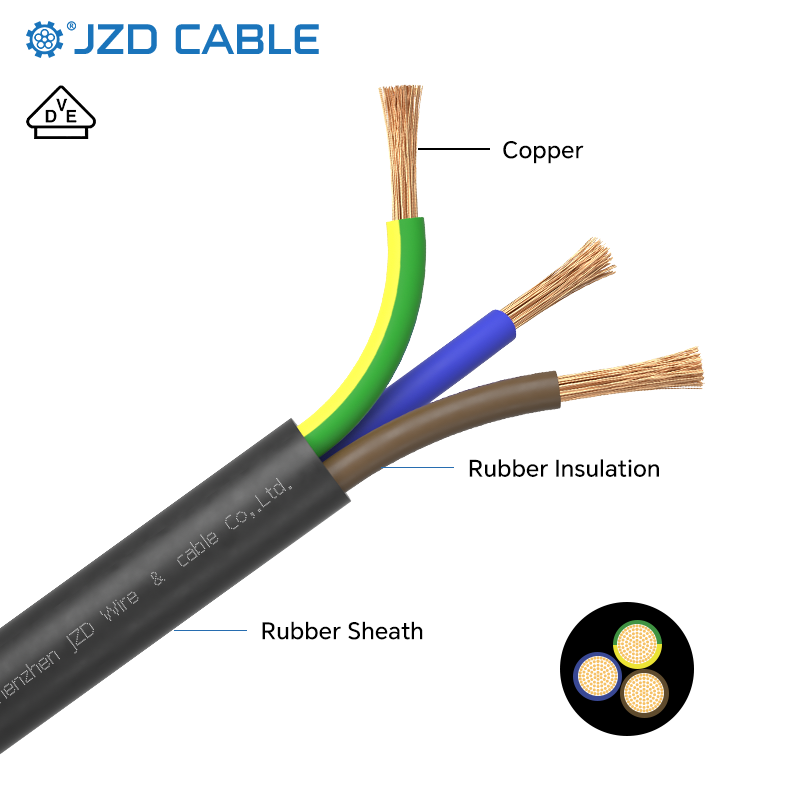
A typical Electrical Cables structure usually includes the following parts:
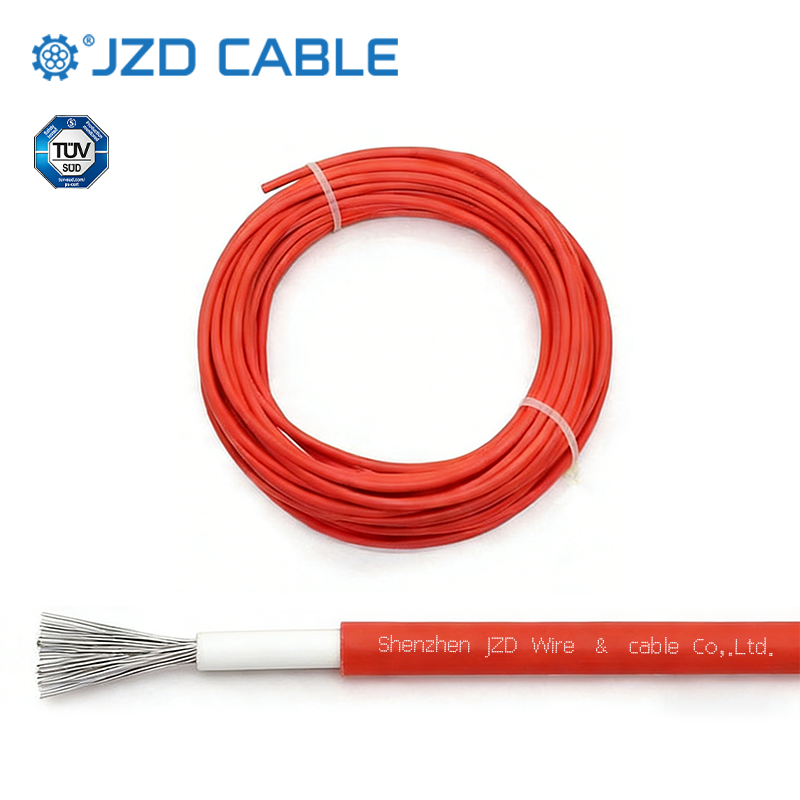
- Conductor: Carries the current, typically annealed copper or aluminum, either solid or stranded.
- Insulation: Encloses the conductor to prevent leakage or short circuits (e.g., PVC, XLPE, or rubber).
- Shield (Optional): Used to prevent electromagnetic interference (EMI), common in control or instrumentation cables.
- Jacket: The outermost mechanical and chemical protective layer, shielding internal structures from environmental corrosion.
Understanding these basic structures is a prerequisite for understanding why different Electrical Cables are suitable for different industrial scenarios.
Wire vs. Electrical Cables
In daily communication, “wire” and “cable” are often used interchangeably, but electrical codes draw a clear boundary:
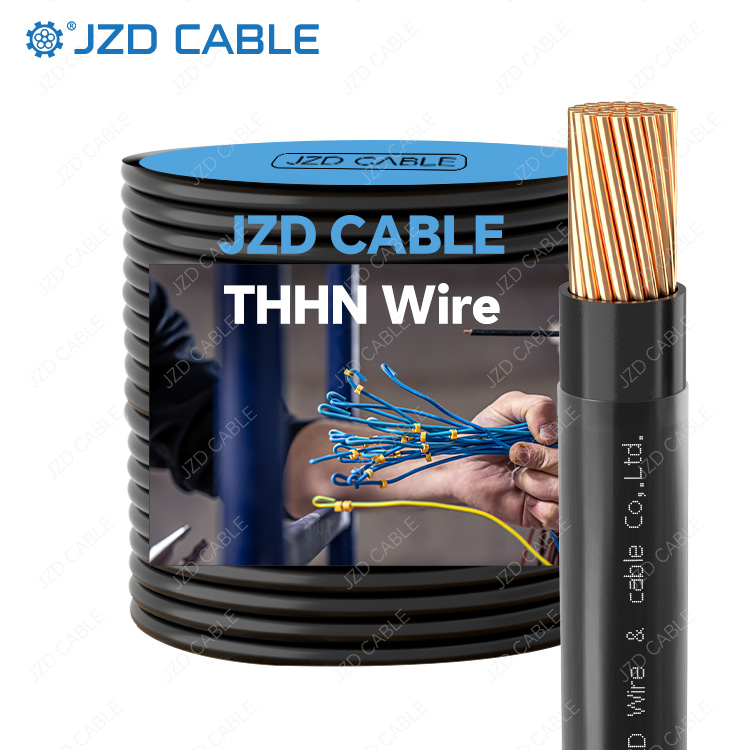
- Wire: Refers to a single conductor (solid or stranded) covered with an insulation layer. For example, THHN single-core wire.
- Electrical Cables: Refers to an assembly of one or more insulated wires enclosed within a single outer jacket. Examples include MC metal-clad cable, TC-ER tray cable, or NM-B non-metallic sheathed cable.
This distinction dictates the selection logic: Wire focuses on the insulation thickness and temperature rating of a single conductor, while Electrical Cables require coordinating the internal conductor arrangement, shielding (if any), grounding path, and the mechanical and chemical protection of the outer jacket.
Conductor Structure: Solid vs. Stranded
The conductor is the current-carrying core of Electrical Cables, primarily made of copper or aluminum. Beyond cross-sectional area and material, the structural form determines the installation method and mechanical lifespan.
1. Solid Conductor
A single rigid metal core, dimensionally stable, and simple to terminate. In scenarios like fixed wiring and short jumpers inside distribution panels where there is no mechanical movement, Electrical Cables with solid conductors offer a clear cost advantage.
2. Stranded Conductor
Made of multiple fine copper wires twisted together. The stranded structure distributes bending stress across more individual wires, resulting in a much longer fatigue life than solid conductors. For routing through long conduits, navigating complex obstacles, or environments with vibration, Electrical Cables with stranded conductors are the more reliable choice.
In industrial control panels and mobile equipment wiring, Class 5 or Class 6 finely stranded conductors can withstand frequent flexing without internal breakage.
Common Types of Electrical Cables and Application Boundaries
Within the broad category of Electrical Cables, there are both single-core building wires and multi-core composite cables. The following are common UL-listed electrical cable types and their structural correspondences:
1. THHN/THWN-2 Building Wire
Single-core Electrical Cables with thermoplastic PVC insulation and a nylon jacket, rated 600V, 90°C. The nylon layer provides a low-friction surface for easier pulling and enhances oil and gasoline resistance. Widely used for commercial and industrial branch circuits and internal control panel wiring.
2. XHHW-2 Building Wire
Electrical Cables with thermoset cross-linked polyethylene (XLPE) insulation, rated 600V/1000V, 90°C dry/wet. XLPE degrades more slowly under long-term heat exposure and wet environments, with a short-circuit withstand temperature of 250°C. Suitable for feeders, UPS circuits, and wet or high-temperature environments.
3. TC-ER Tray Cable
Tray Electrical Cables compliant with UL 1277, passing the UL 1569 crush and impact tests, allowing exposed runs outside trays without full conduit. Suitable for exposed wiring in industrial automation, renewable energy, and commercial buildings. Some models offer shielding for EMI protection.
4. MC Cable (Metal-Clad)
Electrical Cables using interlocked aluminum armor with a dedicated internal green grounding conductor. Resists crushing and rodent damage, suitable for paths subject to physical impact in commercial ceilings and equipment rooms. Unlike AC cable (which relies on the armor for grounding), the metal armor of MC cable itself is not recognized as an equipment grounding conductor; grounding must rely on the internal ground wire.
5. NM-B Non-Metallic Sheathed Cable (Romex)
Flat electrical cables with multi-core copper conductors, individual PVC-insulated conductors covered by a nylon sheath, and an overall PVC jacket. Suitable for dry indoor fixed wiring in residential and light commercial buildings. Not permitted in wet locations or commercial buildings exceeding three floors.
6. SOOW/SJOOW Portable Rubber Cables
Flexible Electrical Cables with thermoset rubber insulation and jacket, resistant to oil, water, and weather. SOOW is rated 600V heavy-duty; SJOOW is rated 300V medium-duty. Suitable for mobile equipment, handheld tools, and temporary power.

Insulation and Jacket Materials of Electrical Cables
Insulation and jackets determine the performance boundaries of Electrical Cables under temperature, chemical, and mechanical stress.
| Material | Temperature Rating | Core Features | Typical Applications |
| PVC | 70°C–105°C | Low cost, flame retardant, flexibility depend on plasticizers | Building wire, control cables |
| XLPE | 90°C (short circuit 250°C) | Thermoset resists thermal aging and moisture, low dielectric loss | Feeders, wet locations, high-temp environments |
| EPR/CPE | 90°C | Oil-resistant, cold-resistant (-40°C), anti-fatigue | Portable cables, mobile equipment |
| LSZH | 90°C | Extremely low halogen acid gas release and smoke density when burned | Enclosed spaces, data centers, public transit |
Engineering Note: XLPE maintains insulation resistance better than PVC under long-term high temperatures and wet conditions. In data centers or industrial scenarios requiring continuous full-load operation, choosing XLPE-insulated XHHW-2 Electrical Cables instead of PVC-insulated THHN can delay insulation aging and reduce later replacement costs.
Key Dimensions for Selecting Electrical Cables
Based on the material and type analysis above, in actual projects, engineering teams must cross-verify the following four dimensions to lock in the final model:
1. Dimension 1: Environmental Exposure (Defining the Material Baseline)
Avoid standard PVC in wet or buried environments; XLPE insulation (such as XHHW-2) must be used. For extreme cold, oily, or chemical plant environments, rubber or specialized jackets with low-temperature and chemical resistance are mandatory.
2. Dimension 2: Installation and Mechanical Stress (Determining Physical Structure)
Choose flat NM-B for dry indoor fixed wiring; select MC metal-clad for ceilings or equipment rooms with impact risks; use TC-ER for exposed transitions outside trays without conduit; and in areas with continuous vibration, fine-stranded conductors must be used to resist metal fatigue.
3. Dimension 3: Thermal Correction (Eliminating Overheating Hazards)
Never select cables based solely on nominal values. In enclosed cabinets or bundled installations, derating per NEC coefficients is mandatory. If a 90°C cable is connected to a 75°C breaker terminal, the entire circuit must be based on the 75°C column. Long-distance feeders also require additional voltage drop calculations.
4. Dimension 4: Compliance and Verification (Ensuring Inspection Success)
Verify that the product has the corresponding UL listing and additional ratings (such as SUN RES, DIR BUR, LSZH). Prevent “downgrade substitutions” (e.g., using TPE instead of CPE rubber) by requiring suppliers to provide third-party test reports for critical performance metrics upon delivery.
Conclusion
The selection of Electrical Cables is a system engineering task involving the conductor, insulation, jacket, and installation environment. Solid vs. stranded determines mechanical life, PVC vs. XLPE determines the thermal aging boundary, THHN vs. XHHW-2 corresponds to different location ratings, and TC-ER and MC expand the freedom of wiring without conduit. Aligning these dimensions during the design phase is far more economical than discovering and replacing issues on site.
For specifications, certification documents, or project selection support for THHN/THWN-2, XHHW-2, TC-ER tray cables, or rubber portable Electrical Cables, please contact us.