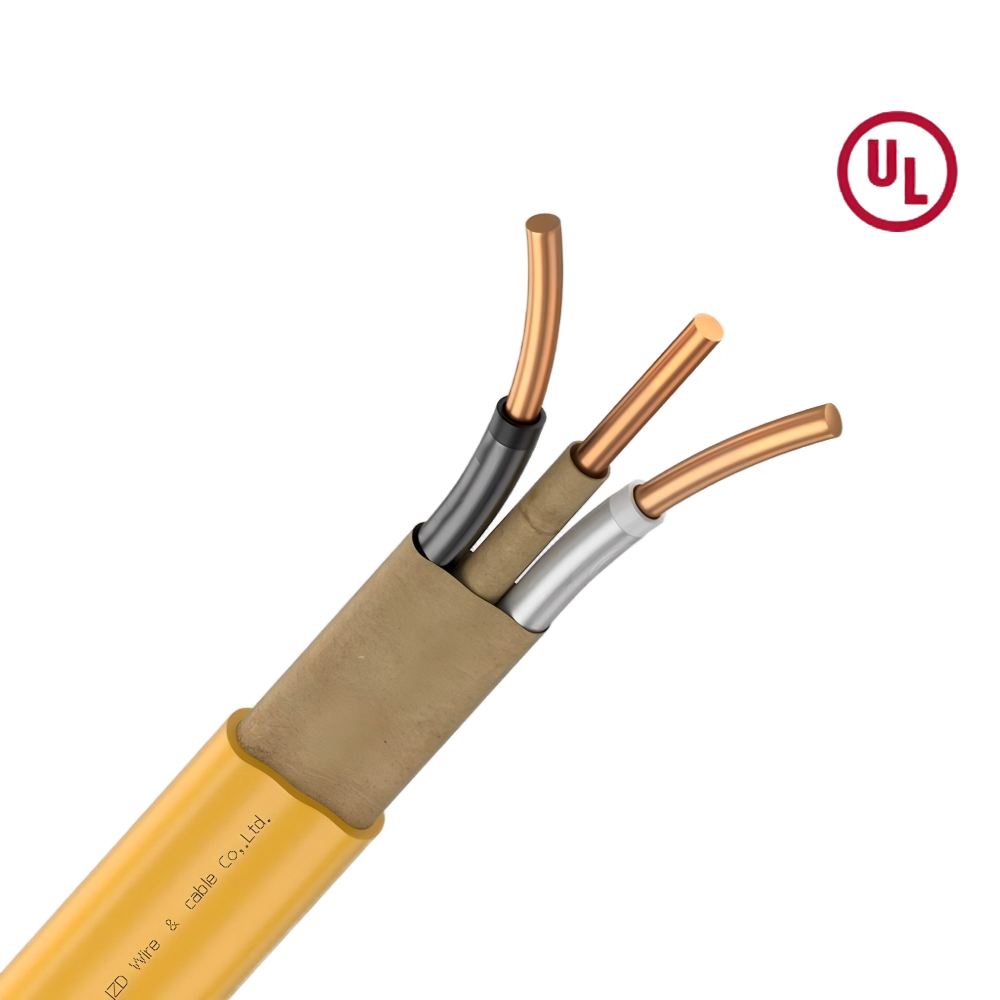


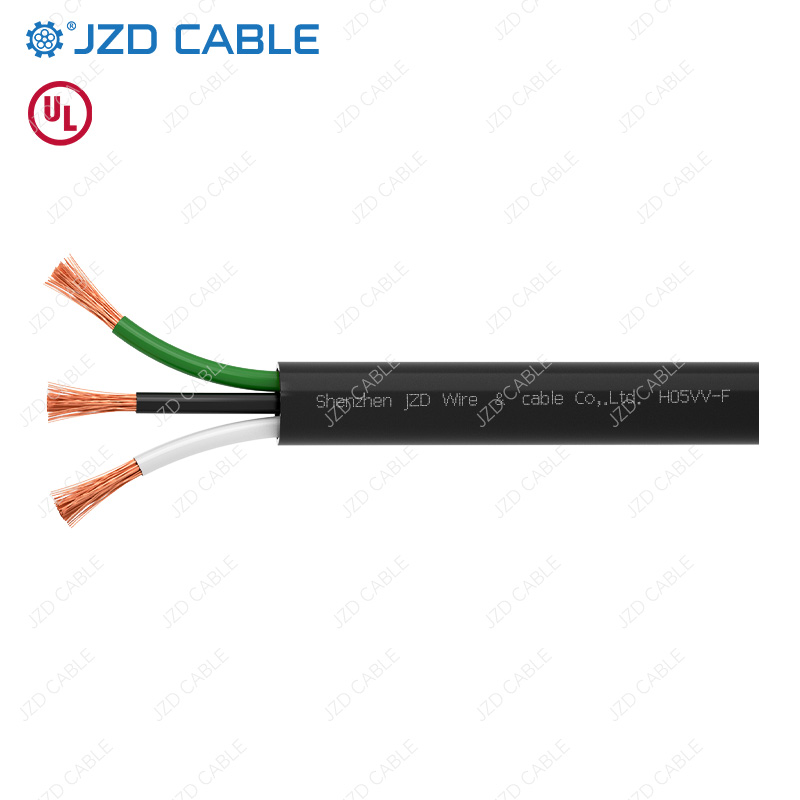
On construction sites, outdoor equipment, and temporary power distribution, portable cables from the same batch can last years in one project but crack within months in another. The cause is usually not cable quality but whether the jacket material fits the application.
SJTW, SJT, and STW are three UL 62 portable cable types. None is inherently superior; each suits different voltage, environment, and mechanical stress. Selection is about matching, not ranking.
Chemical Differences in Jacket Materials: PVC and Rubber Each Have Their Boundaries
SJTW and STW differ most noticeably not in voltage rating, but in jacket material.
1. PVC Jacket Characteristics
SJTW and SJT use a thermoplastic PVC jacket. Thermoplastic materials soften when heated and harden when cooled, and this process is reversible. PVC flexibility depends on plasticizers in the formulation. Under normal operating conditions, PVC jackets provide good weather resistance, abrasion resistance, and insulation performance.
In long-term contact with oil or chemical solvents, plasticizers may gradually migrate and leach out, causing the jacket to harden, shrink, or even crack. Under continuous UV exposure, PVC molecular chains can also undergo photo-oxidative degradation, accelerating surface chalking. These changes occur under specific environmental conditions, not in all applications.
2. Rubber Jacket Characteristics
STW uses a thermoset rubber jacket, such as chloroprene rubber or CPE. Thermoset materials form a three-dimensional network through chemical cross-linking and do not soften again when heated. This cross-linked structure does not rely on plasticizers for flexibility, so it is less prone to plasticizer migration when exposed to oil, gasoline, ozone, and chemical solvents.
Rubber jackets remain flexible at -50°C, while PVC jackets reach their flexibility limit around -40°C. In extremely cold, oily, or chemically exposed environments, rubber jackets typically last longer.
3. What the Test Data Shows
Oil resistance of jacket materials can be evaluated through ASTM D471. This test immerses jacket samples in specified oil for a set period, then measures hardness change, volume swelling, and tensile strength retention. PVC jackets may show more noticeable hardness and volume changes after prolonged oil immersion, while rubber jackets typically change less under the same conditions.
Tensile properties are tested per ASTM D412. Rubber jackets generally have a higher elongation retention after aging than PVC. The lower the elongation retention, the more brittle the material becomes, and the more likely it is to crack when bent. These test results help determine whether a jacket material is suitable for a specific environment, rather than simply judging which material is better.
Ampacity: Nominal Value vs. Actual Allowable Value
Portable cables are available in 60°C, 75°C, and 90°C ratings. The example below assumes a 90°C-rated cable.
Regardless of jacket material, conductors operating at or above allowable ampacity for extended periods will accelerate jacket aging. Actual allowable ampacity is affected by three variables.
1. Ambient Temperature Correction
Allowable ampacity is based on NEC Table 400.5(A)(1) or 400.5(A)(2), baseline 30°C. Above 30°C, derate per NEC 310.15(B). For a 90°C-rated cable at 30°C baseline, conductor rise is 60°C. At 45°C ambient, allowable rise is 45°C; correction factor is √(45/60) ≈ 0.87. A 20A cable becomes about 17.4A.
2. Bundled Conductor Correction
When multiple current-carrying conductors are bundled or run in the same conduit, heat dissipation worsens. NEC 400.5(A)(2) gives correction factors of 0.80 for 4–6 conductors, 0.70 for 7–9, and 0.50 for 10–20. In a typical temporary power scenario with 7 current-carrying conductors at 40°C outdoor ambient, combined corrected ampacity may be only about 60% of nominal.
3. Termination Temperature Limitation
NEC 110.14(C): allowable ampacity cannot exceed termination temperature rating. Most breakers and receptacles have 60°C or 75°C terminations. Even if cable is rated 90°C, final ampacity may be based on the 60°C or 75°C column. This is a termination limit, not a cable rating.
After determining ampacity values, consider the specific application environment to determine whether the jacket type is appropriate.
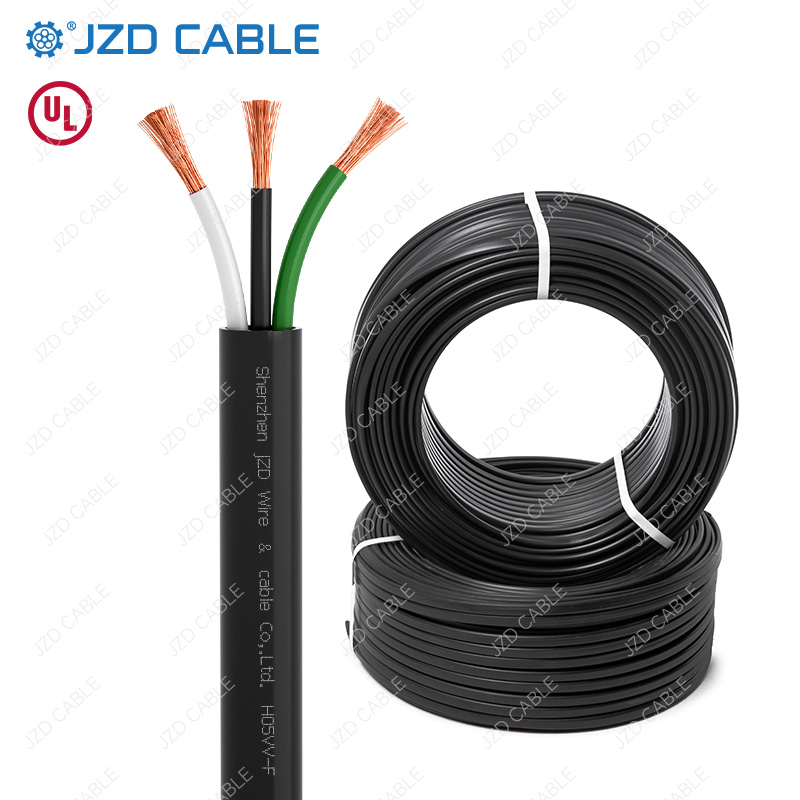
Application-Based Selection: Different Environments Require Different Jacket Types
Once jacket material and ampacity are determined, selection needs to return to specific scenarios.
1. Construction Sites, Outdoor Tools, Temporary Lighting
The core requirements are weather resistance and abrasion resistance. Voltage is typically 120V or 240V, within the 300V class. SJTW is a common choice for these scenarios. Its PVC jacket provides adequate weather and abrasion resistance in dry or generally damp outdoor environments, at reasonable cost.
If the site has oil or chemical exposure, or winter temperatures are consistently below -20°C, SJTOW or STW can be evaluated. SJTOW is a variant of SJTW with added oil resistance in the outer jacket, but the “O” only indicates outer jacket oil resistance; the conductor insulation does not have an oil-resistance rating.
2. Cold Storage, Cold Chain Loading Areas
Ambient temperatures are consistently below -25°C, and PVC jackets approach their flexibility limit. STW rubber jackets remain flexible at -50°C and are the standard choice for these environments.
3. Refineries, Chemical Plants, Mines
Oil, solvents, ozone, and mechanical wear coexist. These environments accelerate PVC jacket aging. STW thermoset rubber jackets are less prone to plasticizer migration and typically last longer in these environments.
4. Mobile Equipment, Temporary Distribution Panel Feeders
When equipment voltage exceeds 300V, SJTW is no longer suitable. SJTW is rated 300V, while STW is rated 600V. Using 300 V cable on 480 V equipment is a serious violation. In actual projects, lighting fixtures, stage equipment, and industrial motors often operate at 480V or higher, and using 300V-class SJTW cable creates a risk of insulation breakdown.
5. Indoor Dry Environments
For office equipment, household appliances, and similar dry indoor applications with no oil and no direct sunlight, SJT is sufficient and there is no need to pay extra for a “W” rating.
NEC 400 Usage Restrictions: Portable Cable Is Not Fixed Wiring
In addition to jacket material and ampacity, installation location also affects the applicable scope of portable cables. NEC Article 400 places clear restrictions on installation scenarios.
1. Prohibited Uses
Portable cable cannot be used as permanent fixed wiring in buildings; cannot pass through walls, floors, or ceilings, or be concealed above ceilings or inside walls; cannot pass through doors, windows, or other structural openings; cannot be installed in raceways (unless otherwise permitted by other NEC articles).
2. Conditionally Permitted
In industrial environments, where the specific conditions of NEC 368.56(B) are met, portable cable may be secured to building surfaces. Other than that, it cannot be directly secured to walls or ceilings.
The underlying logic is that portable cable is designed for movable connections, not for interior building distribution. Once damaged in a concealed space, it is difficult to detect and replace, and overheating and short-circuit risks cannot be identified through routine inspection.
Verification Points: From Standard to Physical Product
After selection is determined, the following items should be verified in the supply chain.
1. Confirm Jacket Material Matches the Type Designation
Suppliers should provide the jacket material grade or formulation type. If a supplier cannot clearly state the cross-linking type of jacket material, there is a risk of PVC being passed off as rubber.
2. Verify UL 62 Listing and CSA Certification
Products should have UL 62 listing, not just UL recognition. Listing means the finished product has passed all tests required by the standard, including cold bend, oil resistance, abrasion resistance, and flame resistance.
3. Request Ampacity Correction Documentation
Suppliers should provide correction methodology based on NEC 400.5 and 310.15(B), including ambient temperature correction factors and bundled conductor correction factors.
4. Confirm Voltage Rating Matches Equipment
Selection should be based on equipment voltage rating, not simply on wire gauge and conductor count.
5. Check Batch Consistency
Conductors should use Class K or equivalent flexible stranding, and batch-to-batch stranding lay length and jacket thickness should remain consistent. Unstable stranding parameters directly affect bending life.
Cost Logic: Application Determines Lifecycle Cost
Cost depends on the application, not just unit price. In dry, normal-temperature, oil-free outdoor environments, SJTW is usually more economical, and choosing STW may add unnecessary cost. In oily, extremely cold, or chemically exposed environments, SJTW may age faster and need more frequent replacement, so STW’s longer life can offset its higher price. Consider three variables together: unit price, replacement cycle, and labor and downtime costs. For frequent movement in harsh conditions, lifecycle cost matters more than unit price; for mild environments, SJTW is often the better choice.
Quick Comparison
| Item | SJT | SJTW | STW |
| Jacket material | Thermoplastic PVC | Thermoplastic PVC | Thermoset rubber |
| Voltage rating | 300V | 300V | 600V |
| Temperature range | -40°C to +90°C | -40°C to +90°C | -50°C to +90°C |
| Outdoor use | Not suitable | Suitable | Suitable |
| Oil resistance | Poor | Moderate | Excellent |
| Cold resistance | Hardens at low temperature | Good low-temperature performance | Remains flexible in extreme cold |
| UV/weather resistance | Poor | Good | Excellent |
| Typical applications | Indoor appliances, office equipment | Construction sites, outdoor tools, general industry | Heavy industry, refineries, cold storage, mining |
Conclusion
The service life difference comes down to whether jacket material, ampacity, and installation rules match the application. SJT suits indoor dry areas; SJTW covers most outdoor and general industrial use; STW handles heavy industry, extreme cold, and oily environments. Start with the application, confirm voltage, then choose jacket based on temperature, oil exposure, and mechanical stress, while accounting for ampacity derating and NEC 400. Matching matters more than material grade.
If you need UL 62 certified STW, SJTW, or SJT portable cable, contact us for specifications, certifications, or bulk supply.