



UL 44 SIS Wire: How to Choose Switchboard Wiring Cable
For switchboard manufacturers and electrical panel builders, selecting the right internal wiring solution directly affects electrical safety, assembly efficiency, and equipment reliability. Inside switchboards, wires connect breakers, busbars, protection devices, and control components while operating under continuous electrical loads and limited enclosure space. A suitable SIS wire for switchboard applications provides the flexibility, heat resistance, and insulation performance required for
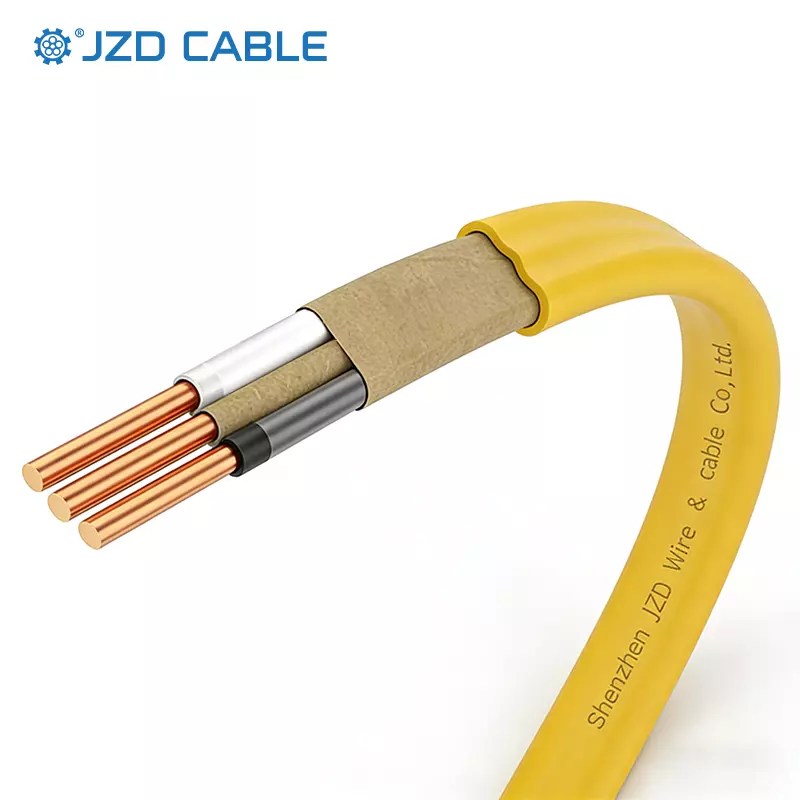
Round NM-B vs Flat NM-B: Which Non-Metallic-Sheathed Cable Belongs in Your Walls?
If you’ve ever pulled NM-B (often called “Romex” — though Romex is technically Southwire’s brand name for NM-B ) off a shelf, you may have noticed something curious: some rolls are cylindrical, others are flat and ribbon-like. Same printing, same voltage, same color-coded jacket — but a completely different cross-section. Both are legitimate UL 719 non-metallic-sheathed cables, both comply with
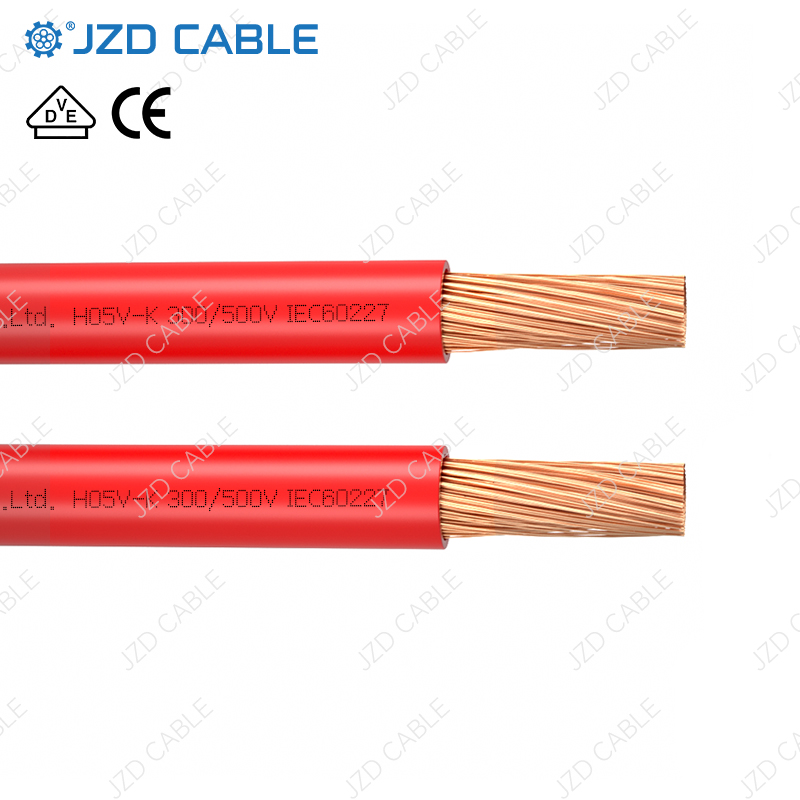
How to Choose Battery Cables for BESS (Storage Systems)
A Battery Energy Storage System (BESS) relies on reliable cable connections to transfer stored energy efficiently. Choosing the right BESS cable helps improve power transmission efficiency, reduce energy loss, and ensure safe long-term operation. For BESS manufacturers, battery cabinet builders, and energy storage integrators, cable selection depends on several factors, including current capacity, cable size, voltage rating, and installation conditions.
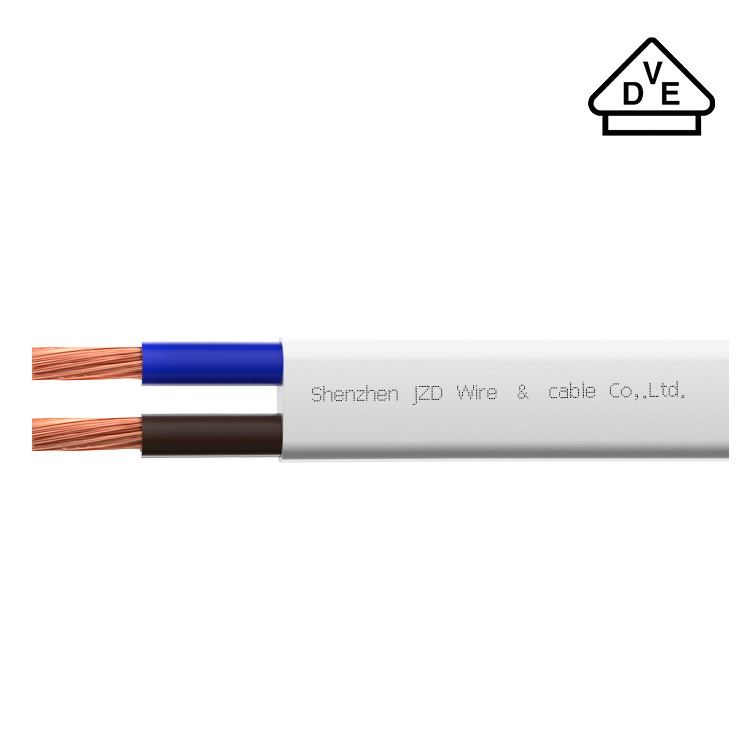
H03VV-F vs H03VVH2-F: Round vs Flat — Which Light-Duty European PVC Cord Do You Need?
If you manufacture small appliances, lighting, or office equipment for the European market, you’ve almost certainly specified H03VV-F — the 300/300V harmonised PVC-insulated, PVC-sheathed flexible cord. But there’s a close sibling that often gets overlooked: H03VVH2-F. Same voltage, same conductor, same insulation and sheath compounds — yet structurally very different. The “H2” in H03VVH2-F is the entire story: it denotes

VDE-Certified H03VV-F Cable: The Complete Guide to 300/300V Light-Duty European Power Cord
If you manufacture or distribute small household appliances, table and floor lamps, office equipment, radios, or vacuum cleaners for the European market, there’s one cable designation you’ll see on virtually every compliant bill of materials: H03VV-F. Backed by VDE certification and the HAR harmonised mark, this 300/300V PVC-insulated, PVC-sheathed flexible cord is the European Union’s default choice for low-mechanical-stress power

How to Select the Right Battery Cable for RV Electrical Systems
For RV manufacturers, OEM builders, and electrical system integrators, selecting the right RV battery cable is an important part of electrical system design. Battery cables connect battery banks with key components such as inverters, converters, and DC distribution systems, directly affecting power transmission and system performance. With the increasing use of lithium batteries, solar charging systems, and high-power inverter solutions,